JNJournal
Writing about the ground half of the journey
Arrivals halls, motorway hours, rear cabins and the forty minutes before a landing. Ninety pieces about the part of a trip that has no seat map.
Written quotation, usually within the hour
The journal: summary
The First Class Chauffeurs journal is written about the ground half of a journey: what an arrivals hall is like at six in the morning, what a particular motorway does to a schedule, what a chauffeur is doing in the forty minutes before a flight lands, and how a rear cabin is put together. It is editorial rather than instructional, and it is filed under six headings — airports, cities and routes, the craft, vehicles, travel and business, and seasons and occasions.
Pieces
90
Categories
6
Newest
28 Jul 2026
Oldest
5 Sept 2024
01About
What gets written here
A first class itinerary is usually well designed in the middle and improvised at both ends. The flight has a seat map, a boarding time and a cabin crew. The ninety minutes before it and the hour after it have none of those, and that is the stretch this journal is about.
Nothing here is a sales page. Some of it is practical, some of it is a road at an unsociable hour, and some of it is a small argument about how a rear seat should be built. If you want the booking side instead, the guides are more use, and a written quotation is faster than either.
02Latest
Most recent first
 01 / 28 Jul 2026Conference arrivals all happen at onceA programme says registration opens at eight thirty and four hundred people believe it. The ground problem writes itself.Read more
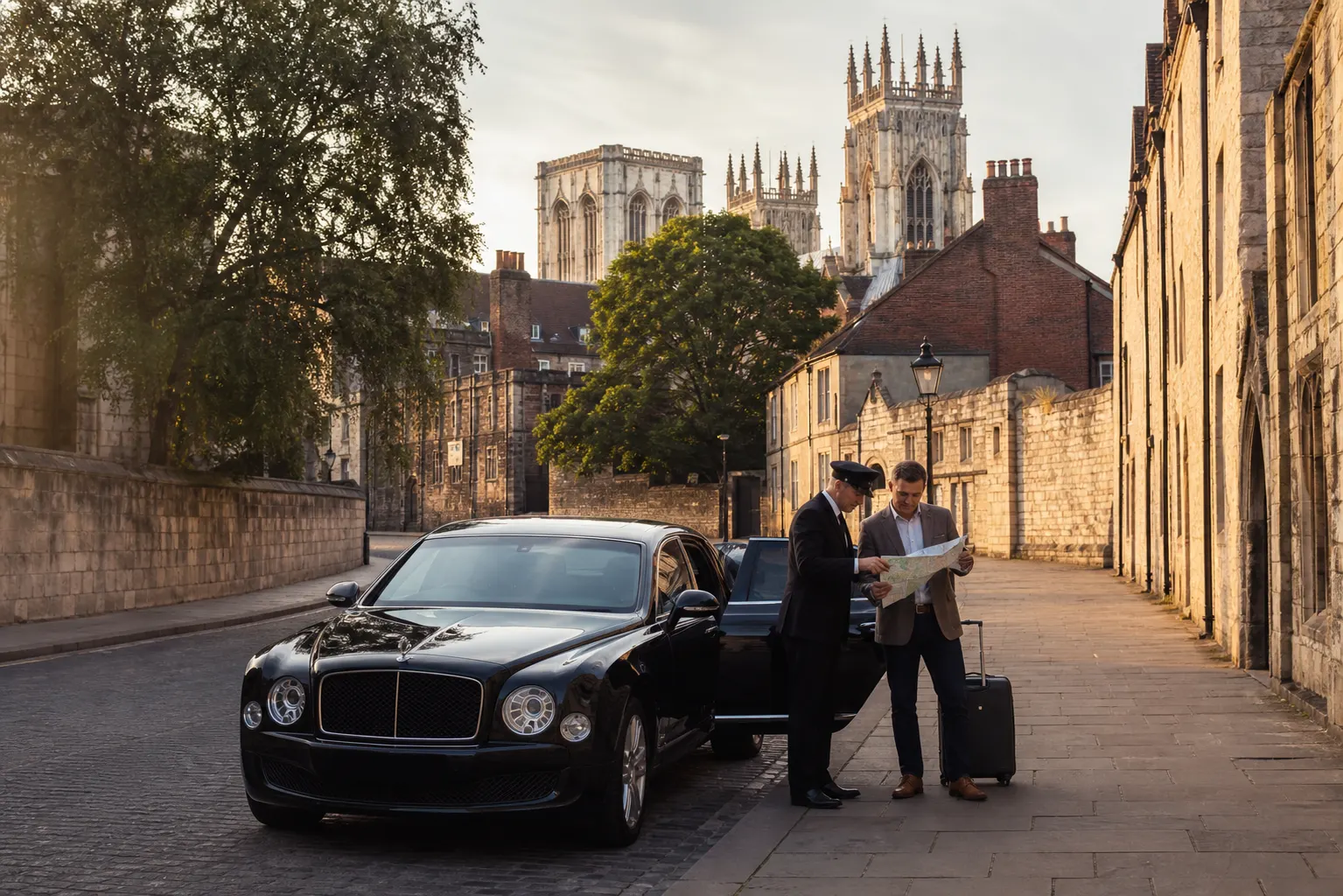 02 / 23 Jul 2026North of Newcastle the road emptiesPast Morpeth the traffic thins and keeps thinning. Northumberland is the least crowded driving in England and the least used.Read more
 03 / 17 Jul 2026A missed connection is a ground problemSomebody misses a connection at Amsterdam and a chauffeur in Manchester finds out before they do. What happens next is the whole job.Read more
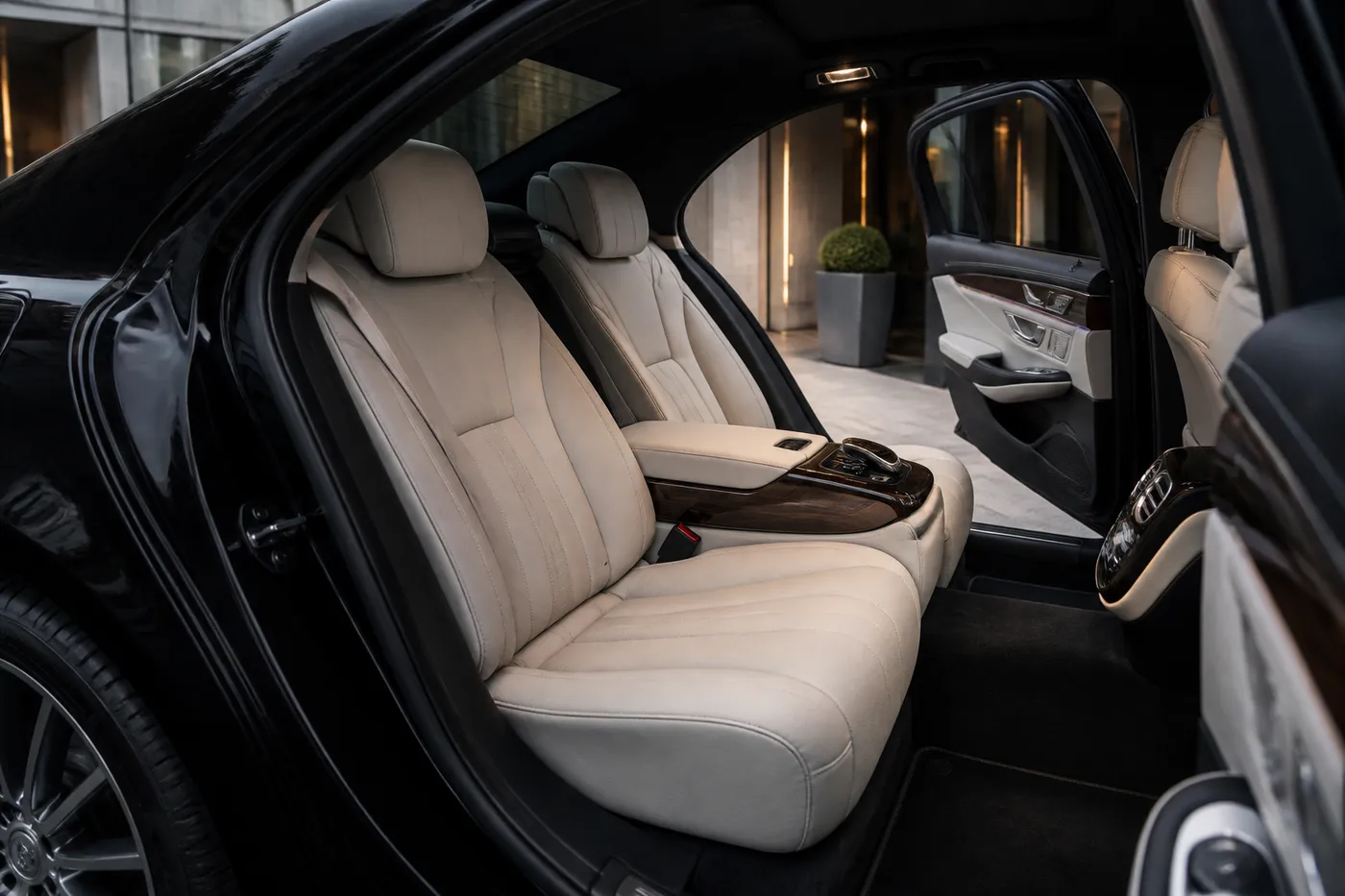 04 / 9 Jul 2026Legroom is not the measurement that mattersA tall passenger in a car with enormous legroom can still be uncomfortable, and usually is. The number being quoted is the wrong one.Read more
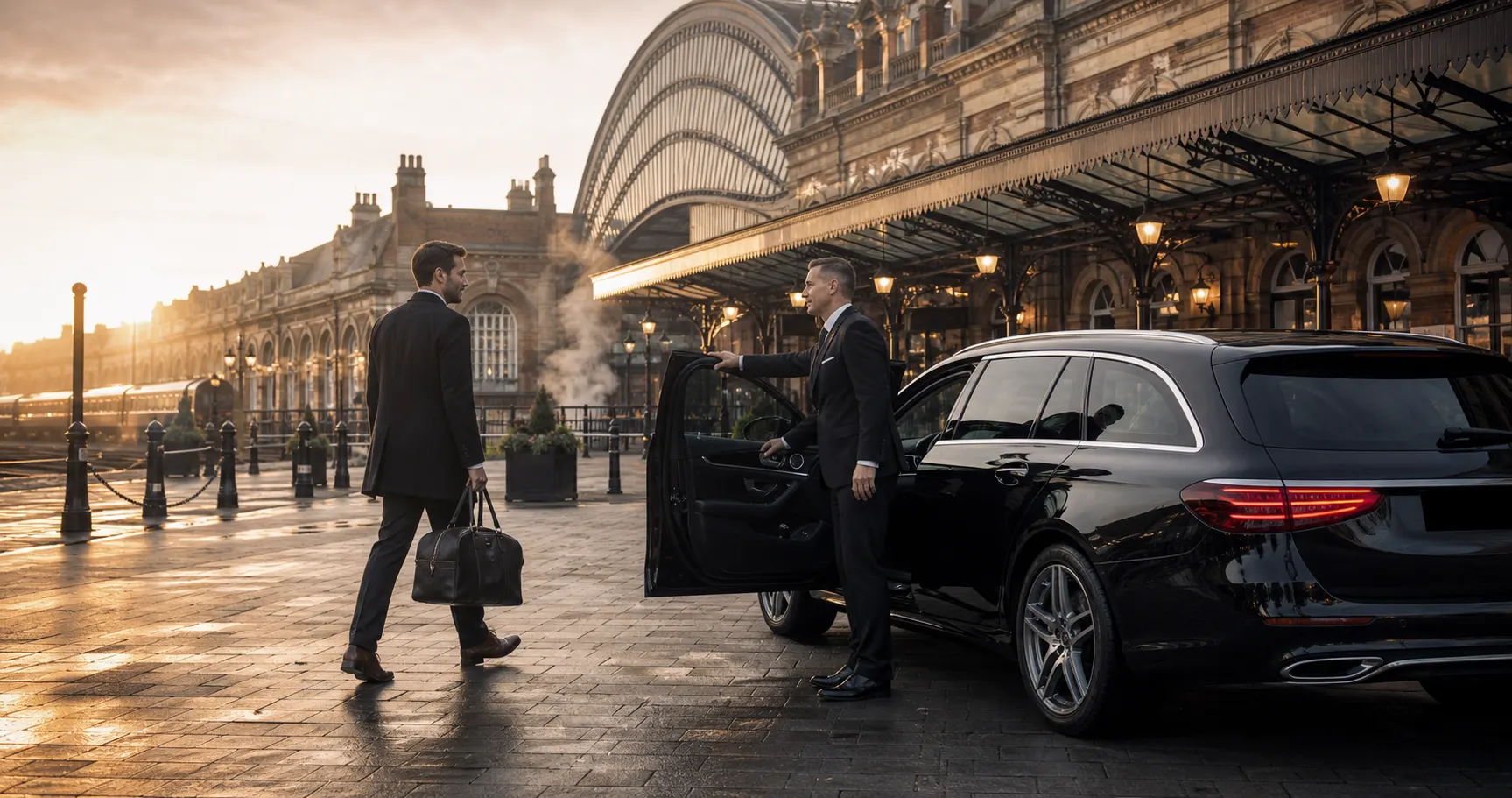
 05 / 5 Jul 2026The handover at the kerbTwenty seconds from the car stopping to the car pulling away. Everything either side of a journey is decided in that window.Read more
 06 / 23 Jun 2026Edinburgh arrivals in a crosswindWind is the thing at Edinburgh. It changes the landing time, the mood in the hall and occasionally the airport you end up at.Read more
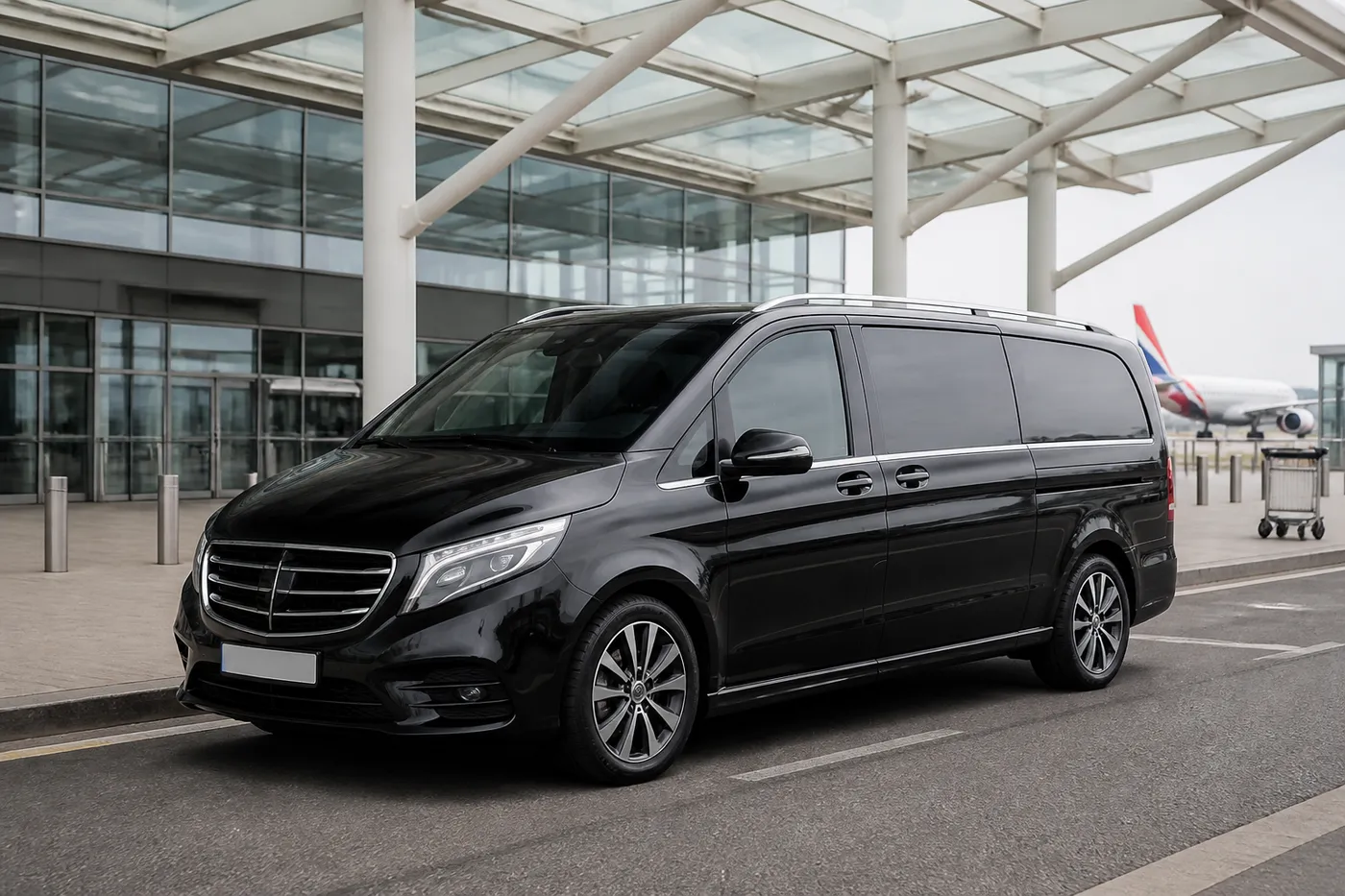 07 / 17 Jun 2026The first Saturday of the school holidaysIt behaves differently from every other Saturday of the year, and every airport and motorway in the country knows it.Read more
 08 / 7 Jun 2026Why the car is always earlyBeing on time is a coin toss. Being early is a decision, and it is the cheapest insurance in the whole business.Read more
 09 / 4 Jun 2026The Cotswolds are a driving problem disguised as a viewNobody drives to the Cotswolds. They drive around them, repeatedly, looking for a turning that is not signposted.Read more
- 10 / 28 May 2026What else is in the bootJump leads, a first aid kit, a folded high-visibility jacket and a spare tie. The luggage shares the space with a small ironmongery.Read more
- 11 / 13 May 2026Glasgow to Edinburgh, and the M8 in betweenForty-odd miles separate Scotland’s two big cities, which is less than a lot of English commutes and feels like more.Read more
 12 / 8 May 2026London City, where the walk is over before you expect itThe smallest London airport produces the fastest arrivals in Britain, and a set of ground problems that belong to it alone.Read more
0320 pieces
Airports
- A missed connection is a ground problemSomebody misses a connection at Amsterdam and a chauffeur in Manchester finds out before they do. What happens next is the whole job.
- Edinburgh arrivals in a crosswindWind is the thing at Edinburgh. It changes the landing time, the mood in the hall and occasionally the airport you end up at.
- London City, where the walk is over before you expect itThe smallest London airport produces the fastest arrivals in Britain, and a set of ground problems that belong to it alone.
- Biggin Hill and the road inAn airfield on the North Downs with London on one side and Kent on the other. The flying is the easy part.
- Landing at two in the morningNight arrivals are a different building, a different road and a different kind of tired. They also go wrong in different ways.
- Where the meeting point actually isMeet you in arrivals is not an instruction. It is a hope. A meeting point has to survive being read by someone who has just woken up.
- Luton and the length of the walkLuton is nearer to London than people assume and further from its own front door than they expect. Both facts matter on the ground.
- The short-stay car park is the real arrivals hallNobody photographs a car park. It is still the piece of infrastructure that decides whether an arrival feels effortless.
- Private terminals do not have arrivals hallsA tail number is five characters and tells you more than a flight number ever will. Business aviation reorganises the whole ground job.
- Some arrivals halls are easier to be met in than othersArrivals halls are designed for crowds, not for finding one person. A few British terminals get it right, and most do not.
- Belfast has two airports and they are not interchangeableOne sits close enough to the city to walk from in a pinch. The other is a proper drive out along the Antrim road.
- Manchester’s terminals, and which one you actually wantManchester grew a terminal at a time and it shows. Knowing which building your flight uses is half of a smooth arrival there.
- Gatwick, and the shuttle nobody budgets forTwo terminals joined by a transit. Get the terminal wrong on a Gatwick booking and you have added a journey inside a journey.
- Farnborough on a Friday afternoonThe ramp fills up in a way it does not on a Tuesday, and the road out fills up at exactly the same hour.
- What a drop-off charge is actually buyingForecourt charges changed how every airport departure works. The money is the small part. The time limit is the real one.
- The last bag on the beltThe gap between wheels down and walking out is the least predictable stretch of any journey, and nobody owns it.
- The geography of a Stansted collectionStansted sits at the end of its own road. That single fact shapes every arrival, every departure and every estimate.
- Heathrow has five front doors and they are not alikeTerminal numbers are not just numbers. Each Heathrow terminal has its own road, its own car park and its own way of letting people out.
- Birmingham behaves like a bigger airport than it isA railway station in view of the terminal, a people mover across the gap, and a road network that puts half of England within reach.
- The forty minutes before you landA landing is the end of your journey and the middle of ours. What a chauffeur is doing while the aircraft is still on descent.
0420 pieces
Cities and routes
- North of Newcastle the road emptiesPast Morpeth the traffic thins and keeps thinning. Northumberland is the least crowded driving in England and the least used.
- The Cotswolds are a driving problem disguised as a viewNobody drives to the Cotswolds. They drive around them, repeatedly, looking for a turning that is not signposted.
- Glasgow to Edinburgh, and the M8 in betweenForty-odd miles separate Scotland’s two big cities, which is less than a lot of English commutes and feels like more.
- The geography of a London airport transferLondon’s airports sit around the city like numbers on a clock face, and the M25 is the clock. Which one you use changes everything.
- Oxford to Cambridge is further than it looksEighty miles on a map and no direct road worth the name. The two university cities are connected by everything except a route.
- The M4 corridor is a working day, not a roadBy half past seven the stretch between Reading and Slough is a commuter road with an international airport attached to it.
- The river decides your routeCentral London has fewer road crossings of the Thames than people assume, and every one of them is busy at the same times.
- London to Manchester, and the hour that decides itTwo hundred miles, a fast train alternative, and a case for driving that turns entirely on where the journey actually ends.
- What the A303 does to a FridayA dual carriageway that keeps forgetting it is a dual carriageway, and the west country’s single most reliable source of lost time.
- Heathrow to the City, and the four ways inThere are four sensible routes from Heathrow into the City and each of them is the wrong one at some point in the day.
- The A1 and the M1 do not do the same jobOne was built to move traffic. The other was a road first and became a motorway in instalments. It shows in the driving.
- Over the Pennines between Leeds and ManchesterThe M62 climbs higher than any other motorway in England and then the weather arrives. Forty miles, two economies, one hill.
- The Edinburgh run divides at Scotch CornerNorth Yorkshire is where a Scottish journey stops being one road and becomes a choice between two very different ones.
- The M5 in AugustFor a few weeks a year the motorway south of Bristol becomes a car park with a view of the Quantocks. It is entirely predictable.
- Crossing the SevernTwo bridges, one estuary, and a crossing that quietly decides how long any journey into south Wales is going to take.
- The Lake District in a saloonThe road out of Ambleside towards Kirkstone is signposted The Struggle, which tells you most of what you need to know.
- Clockwise or anticlockwise: the M25 decisionThe M25 is a circle, so there are always two answers. Choosing the wrong one costs about forty minutes and no apology helps.
- The A14 carries the contents of FelixstoweA freight road with a chauffeur car on it. Eastern England is easy to drive and difficult to schedule, for one reason.
- The M6 at four in the morningAt four in the morning the M6 belongs to lorries. It is the fastest the road ever gets and the most tiring to drive.
- Running the south coastThere is no continuous motorway along the south coast, which explains almost everything about driving between its towns.
0515 pieces
The craft
- The handover at the kerbTwenty seconds from the car stopping to the car pulling away. Everything either side of a journey is decided in that window.
- Why the car is always earlyBeing on time is a coin toss. Being early is a decision, and it is the cheapest insurance in the whole business.
- Luggage is a two-handed jobTwo hands on a case, always, including the light one. It is about the car and the case as much as about the back doing the lifting.
- Learning a city’s loading baysEvery city has places a car can legally stand for four minutes, and none of them are on a map you can buy.
- What the uniform is forA plain dark suit, a white shirt and shoes polished this week. It is not costume. It is a way of being recognised at forty metres.
- The quiet hour between two jobsLay-bys, hotel car parks and supermarkets on the edge of towns. This is where a chauffeur spends more of the day than anywhere else.
- Reading a flight boardAn arrivals board tells you four things and hides the fifth, which is the only one that decides when a passenger walks out.
- Learning a city you did not grow up inIt takes about two years to learn a city properly and rather longer to admit that you have not finished.
- The difference between waiting and being readyA driver reclined in a seat is waiting. A driver upright, engine off, with a view of the door, is ready. Nobody pays for the first one.
- Choosing a route you did not planA police car across the junction ahead and ten minutes of planning is finished. What happens in the next twenty seconds is the job.
- Holding a door properlyThe trick is standing behind the door rather than beside it. Everything else about the gesture follows from that one position.
- Where a chauffeur parks, and why it is never outsideNever outside. A car parked directly in front of a house or an office is doing the opposite of what it was booked to do.
- When to speak and when not toThe first three minutes settle it. After that a chauffeur is either a driver or a companion, and getting it wrong is hard to undo.
- The check that happens before the car leaves the yardTyre pressures first, not because they are the most likely thing to be wrong but because they are the easiest to ignore.
- The name board, and what goes on itWhite card, black lettering, held at chest height. A very simple object that gets misused more often than anything else in the trade.
0615 pieces
Vehicles
- Legroom is not the measurement that mattersA tall passenger in a car with enormous legroom can still be uncomfortable, and usually is. The number being quoted is the wrong one.
- What else is in the bootJump leads, a first aid kit, a folded high-visibility jacket and a spare tie. The luggage shares the space with a small ironmongery.
- Boot capacity is measured wrongLitres is how boot space is sold, and litres tell you almost nothing useful about whether four suitcases will fit.
- The step height nobody mentionsThe distance from pavement to seat cushion is the number that decides whether a car suits a passenger, and nobody publishes it.
- Two people, one cabin, two temperaturesTwo passengers in the back rarely want the same temperature, and one of them is usually too polite to mention it.
- Leather, and what it is like at seven in the morningCold in February, hot in July, and beautiful for about eight months of the year. Nobody mentions the other four.
- Ride quality is mostly about the roadComfort is a conversation about tarmac more often than it is a conversation about suspension. The car can only do so much.
- The electric car’s real range on a working dayThe brochure figure assumes a warm day, a gentle right foot and nobody using the heater. A chauffeur’s day assumes none of those.
- Charging between jobsA motorway charger at half past four is not where anybody wants to be. Planning it properly is most of running an electric car for work.
- The people carrier wins more arguments than it losesAlmost nobody asks for one and a good many people should. The van is the most underrated vehicle in executive travel.
- The partition, and when anyone actually uses itA partition is a piece of glass that spends most of its life down. The occasions it goes up are worth understanding.
- A clean car is a maintained carA dirty car is rarely just a dirty car. It is usually the visible end of a set of decisions made somewhere else.
- What a quiet cabin is made ofNoise in a car comes from four places and only one of them is the engine. The other three are where the money goes.
- Privacy glass and what it does not doDarkened glass hides a cabin in daylight and reveals it at night. Most people have the effect exactly backwards.
- The rear seat is a designed objectSomebody sat in a studio and decided how far your knees would be from the seat in front. Most of them got it wrong.
0710 pieces
Travel and business
- Conference arrivals all happen at onceA programme says registration opens at eight thirty and four hundred people believe it. The ground problem writes itself.
- Site visits and the addresses satnav dislikesUnit 14 on an industrial estate, a gate with a keypad, and a postcode that covers eleven buildings. Business travel is not all glass towers.
- The first meeting of a trip decides the restIf the nine o’clock runs late, the eleven runs late. Business travel is a chain, and the first link is the one under most strain.
- Three cities before dinnerBreakfast in Birmingham, lunch in Manchester, an early evening in Leeds. It is a real shape of day and it needs designing.
- The shape of a roadshow daySix meetings, four buildings, one city, and about forty minutes of slack in the entire schedule. The car is the only flexible part.
- The hotel forecourt is a shared resourceA forecourt at eight in the morning has four cars in it and room for two. How that gets resolved says a lot about everybody involved.
- Who sits whereBehind the driver or diagonally opposite. Two seats, not equivalent, and a small piece of etiquette that nobody explains.
- Event day is a parking problemThe hard part of an event is never the driving. It is the last four hundred metres and the three hours afterwards.
- Nobody plans the return legEverybody plans the outward journey. The way home gets booked at four in the afternoon from a corridor, and it shows.
- The two-hour gap in a business diaryThere is a gap in every business day that nobody has decided what to do with. It is usually spent badly.
0810 pieces
Seasons and occasions
- The first Saturday of the school holidaysIt behaves differently from every other Saturday of the year, and every airport and motorway in the country knows it.
- The Friday before a bank holidayBy two o’clock on the Thursday it has already started. The bank holiday getaway is the most reliable traffic event in the calendar.
- The January quietThe phone stops in the second week of January. It is the emptiest month in the calendar and the most useful one.
- Christmas party season on the roadsFrom the last week of November the cities change shape after six. Six weeks of evening work with a rhythm all of its own.
- A black car in AugustThe roof of a black car in direct July sun is too hot to touch. Everything about summer chauffeuring follows from that.
- Conference season begins in SeptemberSeptember is when the diary refills. Ten weeks of events, conferences and business travel packed into the shortest usable window of the year.
- The summer wedding runA wedding car has one deadline in the entire day and it is not negotiable. Everything else about the job follows from that.
- Race weekA racecourse fills every hotel within twenty miles and empties the local roads at odd hours. Four days that behave like nothing else.
- Snow is a ground problemMotorways get gritted. The lane to a country house does not. Almost every winter failure happens in the last two miles.
- The last hour of the yearNine in the evening on the thirty-first is the quietest the roads get. By one in the morning it is the busiest night of the year to be collected.
FCReservations
The journal is opinion. A quotation is a figure you can hold us to.
Send the date, the pick-up and the destination. You will get the vehicle, the chauffeur's arrival time and the price in writing.
- Telephone
- +44 7775 554848
- Hours
- Reservations answered around the clock, every day of the year.