Mercedes-Benz E-Class
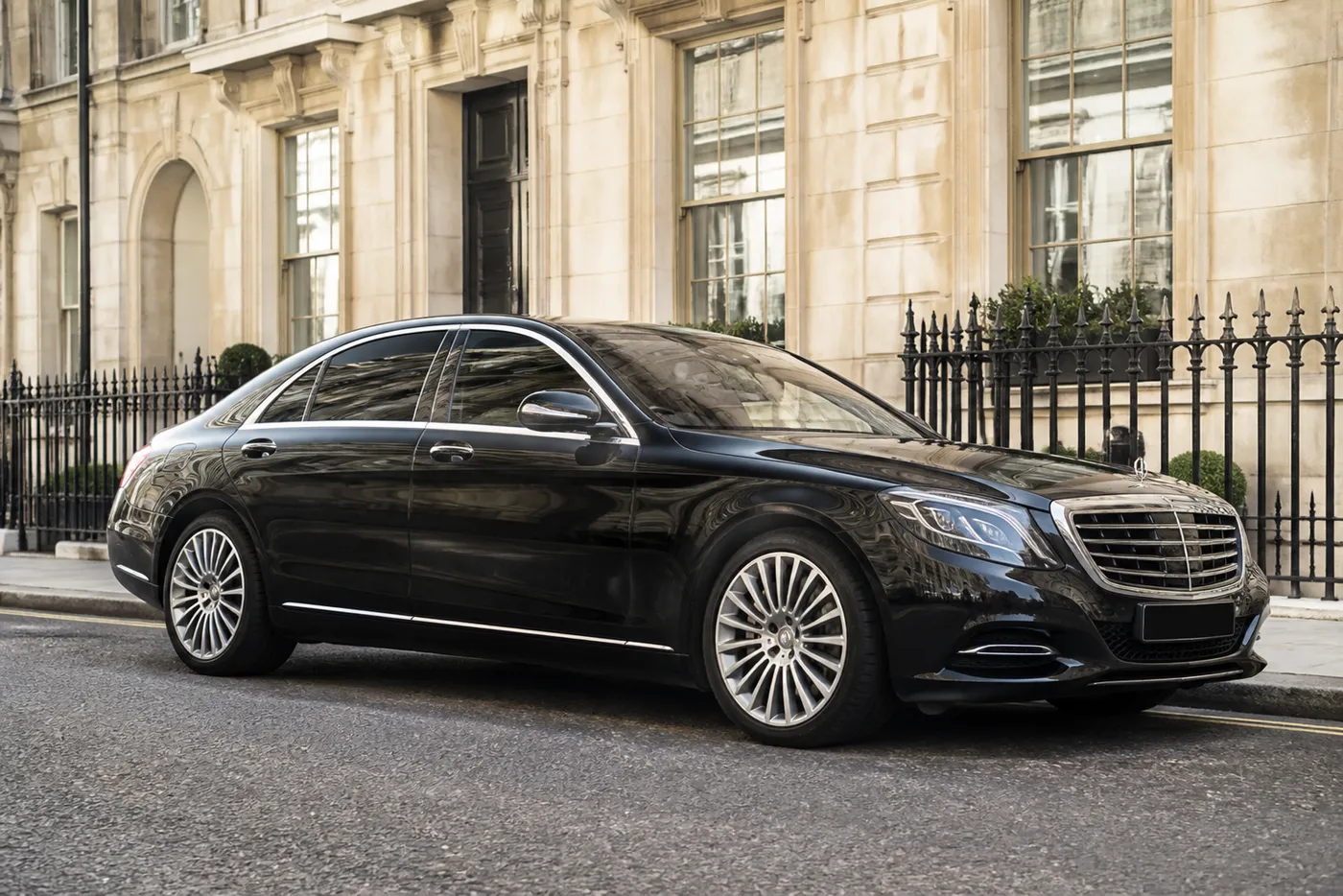
The car most airport runs are done in. A full-size saloon, three seats across the back, and a boot that takes two large cases without an argument.
- Passengers
- Up to 3
- Large cases
- 2, plus cabin bags
- Cabin class
- Cabin
Reservations answered 24 hours, every day of the year
Reservations answered around the clock, every day of the year.
FLThe fleet
Six classes, ordered from the everyday cabin upwards, with seats and cases printed against every vehicle. Each page says what the car is good at and where it stops being enough.

Written quotation, usually within the hour
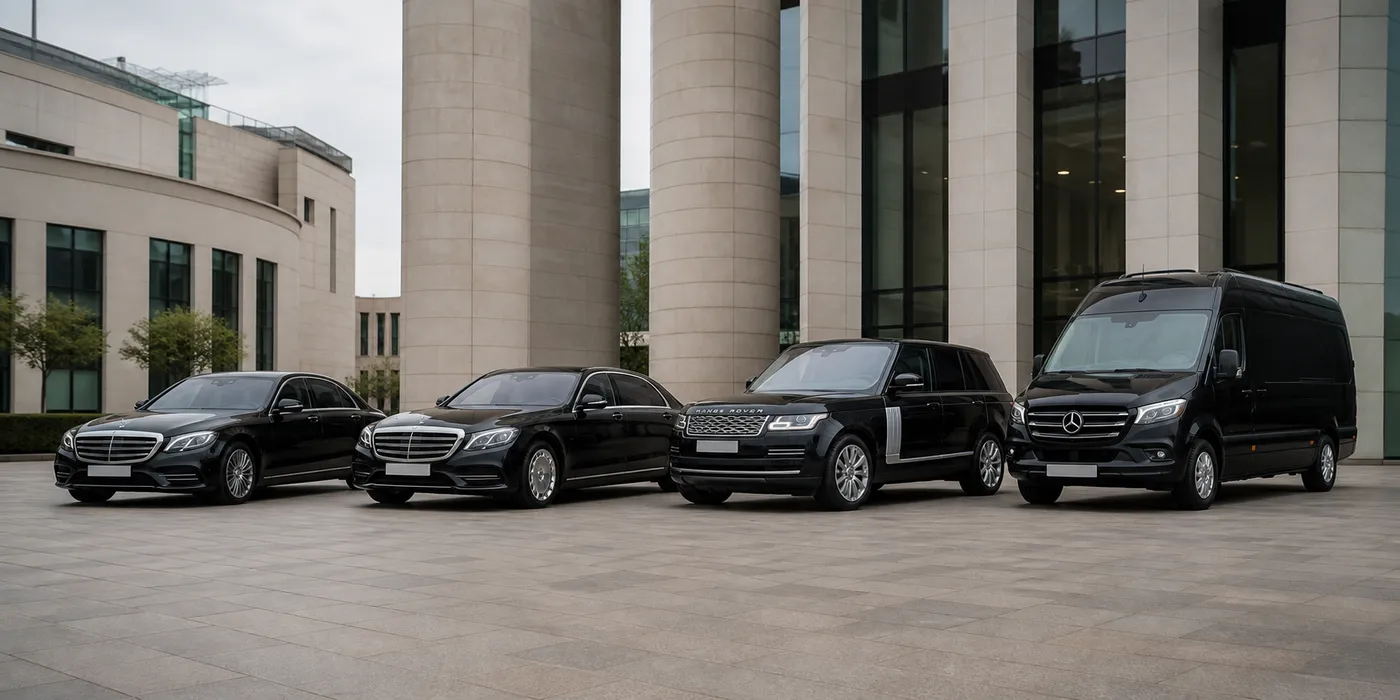
The First Class Chauffeurs fleet, arranged in six classes and ordered from the everyday cabin upwards: Cabin, Cabin MPV, First Saloon, First SUV, Suite and Signature. Vehicles range from a Mercedes-Benz E-Class carrying three passengers and two large cases to a Luxury Sprinter carrying sixteen, by way of the S-Class, the BMW i7, the Defender 110, the Range Rover Autobiography, the Jet Class, the Maybach and three Rolls-Royces. Each entry states what the cabin seats and how many large cases the boot takes, which are the two facts that decide which car a journey needs. No standing price list. Send the journey on WhatsApp and the written quotation confirms the price, what it includes and any applicable tax. Every booking is driven across the United Kingdom, with airport arrivals met inside the terminal rather than telephoned from a car park.
6
12
16 passengers
London based, driving the whole of the United Kingdom.
01How this page works
This page starts with the everyday cabin and works up, which is deliberate. Most chauffeur sites put the Rolls-Royce first and work down; the practical truth is that the majority of journeys are done best in the first two vehicles on this list, and the rest exist for the days where something specific is being asked of the car.
Every vehicle page carries the same sections: what the rear cabin is like to sit in, what the car is good at, where it runs out, how much luggage really fits, and an honest comparison against a sibling that often ends with us recommending the cheaper one. What none of them carries is a price, because a journey is quoted on its own facts rather than read off a table.
NBOn price
No standing price list. Send the journey on WhatsApp and the written quotation confirms the price, what it includes and any applicable tax.
As-directed hire is quoted on the block of hours the car is held for you. Transfers are quoted on the run. Everything else is quoted on the routing, and the written quotation names the vehicle it applies to.
How we price02At a glance
03Vocabulary
One full-size saloon: three seats, two large cases and the rung most journeys are booked on. This is the class to compare a metered fare against.
1 vehicle · up to 3 passengers
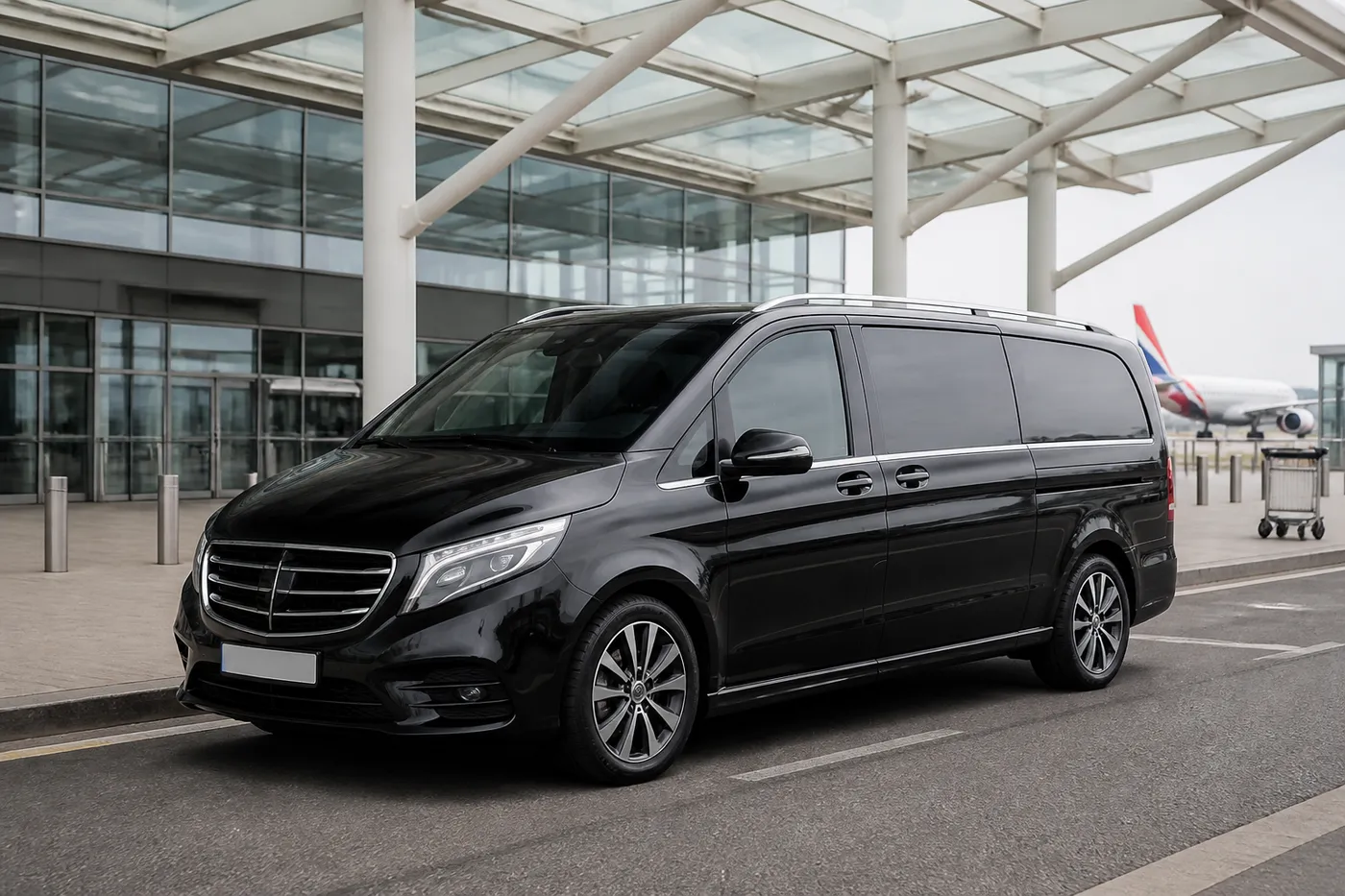
The same standard of driving in a van. Six or seven seats, a sliding door onto the pavement, and a load bay that takes a family’s hold luggage in one go.
1 vehicle · up to 7 passengers
Long-wheelbase saloons. More rear legroom, a much quieter cabin above fifty miles an hour, and a car that reads as a chauffeur car at a hotel door.
2 vehicles · up to 3 passengers
High seats and high roofs, for gravel drives, winter roads and passengers who would rather step across into a car than drop down into one.
2 vehicles · up to 4 passengers
Rear compartments built to be sat in rather than driven from: reclining seats, coach doors, a table you can work at, and cabins that go quiet at speed.
3 vehicles · up to 4 passengers
The top of the card. Two Rolls-Royces for days where the arrival is part of the point, and a sixteen-seat Sprinter for groups that travel as one.
3 vehicles · up to 16 passengers
04Class 01

The car most airport runs are done in. A full-size saloon, three seats across the back, and a boot that takes two large cases without an argument.
05Class 02

Six or seven people, five large cases, and a sliding door that opens straight onto the pavement. The van that stops a group having to travel in two cars.
06Class 03

The long-wheelbase saloon that most of the chauffeur trade is built around, and the smallest car here that reads as a chauffeur car from the pavement.

A fully electric long-wheelbase saloon. The quietest cabin in this fleet under about forty miles an hour, and the one that needs a plan for the charger.
07Class 04

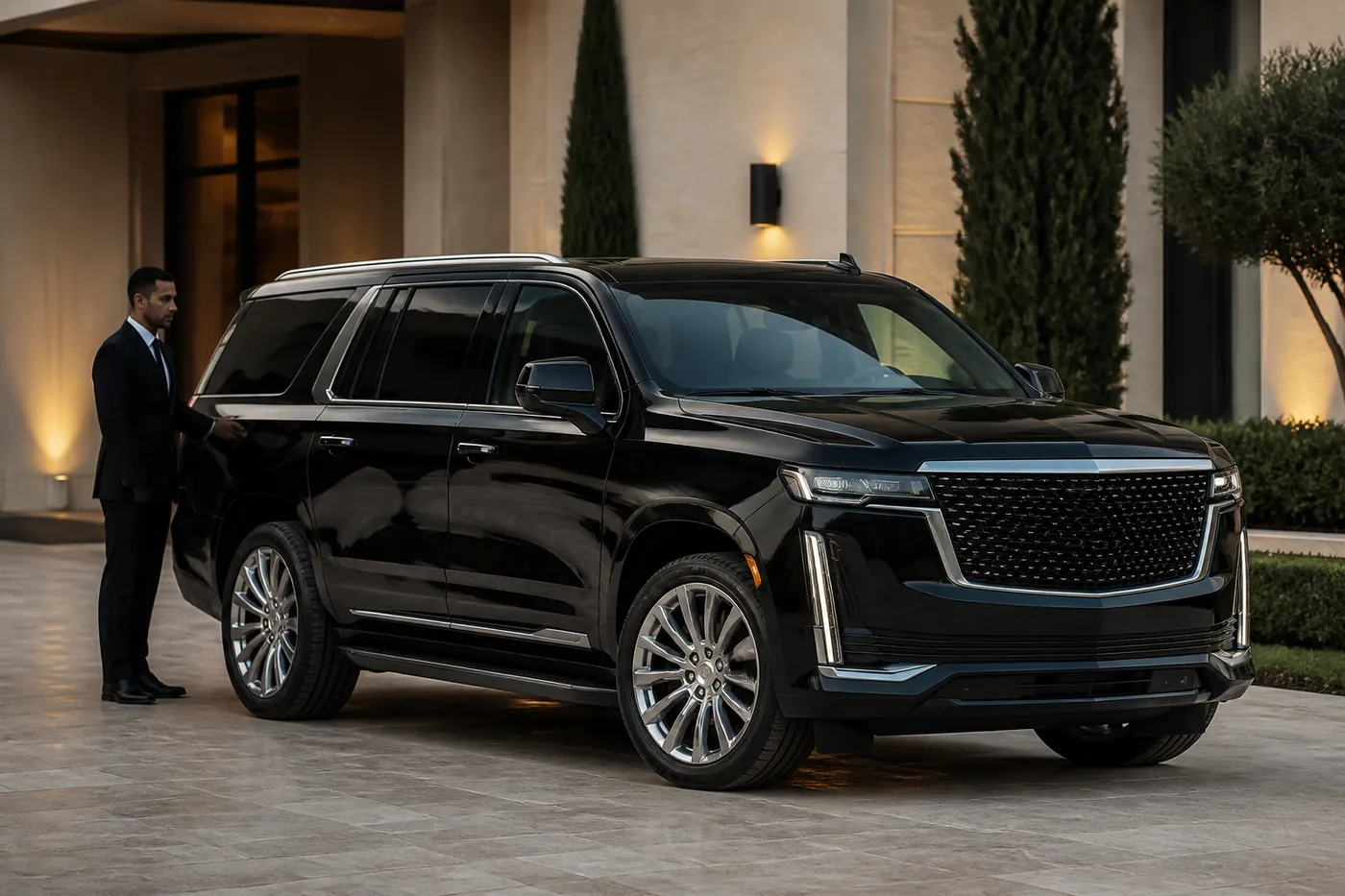
The car booked for where the journey ends rather than how it starts. Four passengers, four cases, and no anxiety about the last two miles of gravel.

A high, quiet cabin that you step across into rather than drop down into. The SUV booked for the person in the back rather than the road ahead.
08Class 05

A V-Class rebuilt around four seats instead of seven. Stand-up height, a table between you, and room for the luggage a private aviation trip actually generates.

An S-Class stretched where it counts, with two rear seats that recline properly and a footrest that changes what a two-hour journey feels like.

The quieter Rolls-Royce. Coach doors that open backwards, a cabin that goes almost silent at speed, and none of the ceremony of the Phantom.
09Class 06

The largest car on this pricing page and the least practical. Booked for the days where arriving is half of what the day is about.

A Rolls-Royce you sit high in, with coach doors and four seats. The one to book when the venue has a gravel drive and the arrival still has to count.

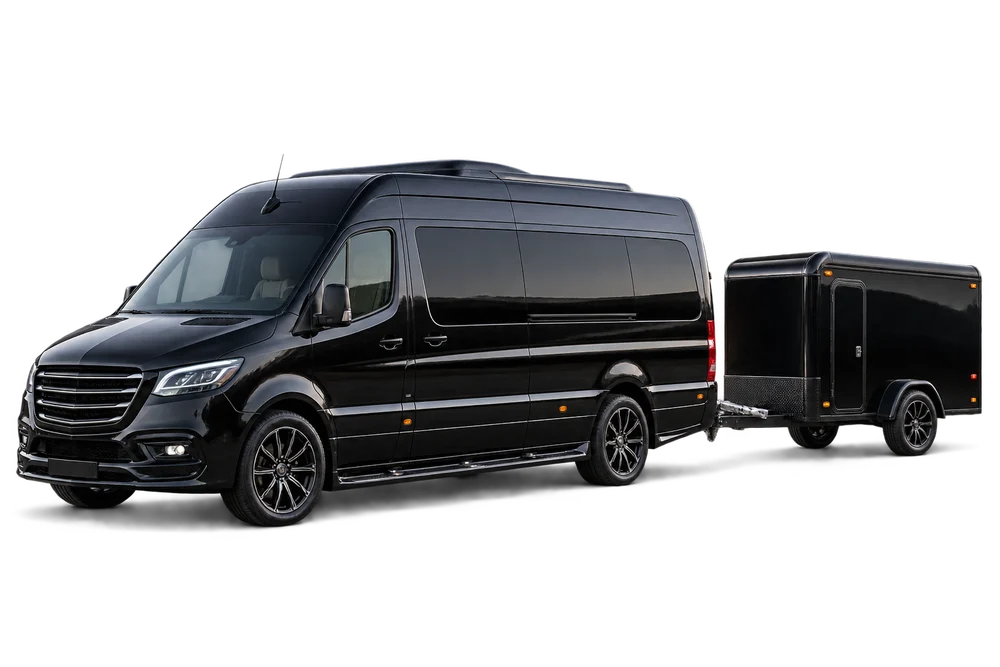
Sixteen seats, a rear luggage bay and enough headroom to walk down the aisle. The vehicle that keeps a large group together instead of splitting it across four cars.
10Comparison
| Vehicle | Passengers | Large cases | Best for |
|---|---|---|---|
| Mercedes-Benz E-ClassCabin | 3 | 2 | One or two people with airport luggage |
| Mercedes-Benz V-ClassCabin MPV | 7 | 5 | Family arrivals with hold luggage |
| Mercedes-Benz S-ClassFirst Saloon | 3 | 3 | Airport runs where someone wants to sleep |
| BMW i7First Saloon | 3 | 3 | City days with a lot of stopping and starting |
| Land Rover Defender 110First SUV | 4 | 4 | Country houses at the end of an unmade drive |
| Range Rover AutobiographyFirst SUV | 4 | 4 | Passengers who find low saloons hard work |
| Mercedes-Benz Jet ClassSuite | 4 | 5 | FBO and private aviation transfers |
| Mercedes-Maybach S-ClassSuite | 3 | 3 | Two people on a two-hour motorway leg |
| Rolls-Royce GhostSuite | 3 | 3 | Evenings where the arrival is part of the plan |
| Rolls-Royce PhantomSignature | 3 | 3 | Weddings where the car is in the photographs |
| Rolls-Royce CullinanSignature | 4 | 4 | Country weddings and estate venues |
| Mercedes-Benz Luxury SprinterSignature | 16 | 10 | Groups of nine to sixteen travelling as one |
First Saloon
First SUV
Signature
No standing price list. Send the journey on WhatsApp and the written quotation confirms the price, what it includes and any applicable tax.
11Choosing

CH-01Start with the luggage, not the car
Almost every booking that goes wrong goes wrong at the boot. A saloon that takes two large cases takes two, and the third one ends up on a back seat next to somebody who has been travelling for eleven hours. Passenger numbers can be squeezed at a push; suitcase numbers cannot, and a drop-off lane is not the place to discover which.
So the first question on any enquiry here is how many large cases are travelling, and the second is whether anything is long or rigid. Golf carriers, ski bags, rod tubes, instruments and folded wheelchairs will not go through a saloon boot aperture whatever the published volume says, and they change the answer entirely.
The case counts published against each vehicle on this page are the honest ones with the stated passenger count aboard, not the manufacturer’s number with the seats folded flat. If your load sits close to a limit, say so in the enquiry and you will get a straight answer rather than an optimistic one.

CH-02Count the passengers honestly
Three adults in the back of a saloon works for twenty minutes across a city and stops being pleasant somewhere on the far side of an hour. The person in the middle sits over the transmission tunnel, higher and firmer than the other two, and knows about it for the rest of the journey. That is worth thinking about before the day rather than during it.
Above three passengers there are two real answers. The V-Class takes seven with their luggage, and it is both cheaper and calmer than two saloons arriving five minutes apart. The Jet Class takes four in a rebuilt compartment with a table, which is a different proposition and a considerably more expensive one.
Past eight people, only the Luxury Sprinter is a serious option, and past twelve it is the only one. Between eight and twelve it is worth asking for two vans and one Sprinter quoted side by side, because the answer depends on whether the group needs to split during the day.

CH-03The airport question, and what it changes
Airport work is quoted as a fixed fare for the run rather than by the hour, so the way a car is priced for a city day is not the way it is priced for a terminal. The gaps between the classes are wider on a transfer than they are on an hourly day, which is worth knowing before you choose the cabin.
What does not change between the vehicles is how the collection is run. The flight is watched from the moment the aircraft is airborne, the chauffeur parks and walks into the building, and the meeting point is named in the confirmation with the terminal on it. That is the same in the cheapest car here as in the most expensive.
The vehicle does change where it waits. Saloons use the short-stay levels; vans, SUVs and the two Rolls-Royces are too tall or too long for some of them and use designated pick-up areas instead. Your chauffeur sorts that out beforehand, and it is the reason a confirmation names a level rather than a building.

CH-04By the hour, or by the journey
There are two ways to book anything on this page. A transfer is a fixed price from one address to another, with the car released at the end. As-directed hire keeps the car and the chauffeur with you for a block of hours, with luggage left in the boot and the route decided as the day goes.
The minimum block is shorter on the everyday cabins and longer on the Defender, the Phantom, the Cullinan and the Sprinter, which is why a cheaper car by the hour is not always the cheaper car for half a day. Your quotation names the block that applies, so the two are read together rather than either alone.
The rule of thumb: if you know both ends of the journey and nothing in between, book a transfer. If you have three or more stops, an uncertain finish time, or bags you would rather not carry into a reception, book by the hour. Describe the day on WhatsApp and the quotation will say which of the two works out cheaper for it.
12Included as standard
You are told who is driving and which vehicle is coming before the day, rather than finding out when something pulls up outside.
Arrivals are watched from the flight number or the tail number, so a two-hour delay moves the booking instead of costing you the car.
The car goes into a car park and the chauffeur stands in the arrivals hall with a name board. Nobody is telephoned from a lay-by half a mile away.
The quotation states the price, the vehicle it applies to and what the figure covers, before there is anything to agree to.
How much waiting time is included, and the rate beyond it, is settled at the quotation stage rather than at the kerb afterwards.
Which door, which gate, which side of the road, and whether the vehicle can enter the forecourt at all, is worked out before the day.

13A working rule
A Rolls-Royce carries three large cases. A wedding party of twelve carries almost none. A family coming home from three weeks away carries more than any saloon on this page. Those three facts between them account for most of the awkward bookings, and the answer is usually the same: put the people in one vehicle and the luggage in another.
A V-Class following a Phantom, or a Sprinter alongside a Ghost, costs less than most people expect once it is written down, and it is quoted as one message rather than two bookings. Tell us the passengers and the bags in the same sentence and the cheapest workable arrangement comes back.
14Where they are used
15Answers
They are ours rather than the manufacturers’. Cabin and Cabin MPV are the everyday saloon and van, First Saloon and First SUV are the long-wheelbase cars, Suite covers rear compartments built to be sat in, and Signature is the top of the card. Each class is described above the vehicles in it.
Tell us the passengers, the large cases, the pick-up and the destination, and the quotation comes back with a vehicle named on it. Where a cheaper one does the job just as well, that is the one you will be quoted, and the reason will be in the message.
Because a printed figure cannot know your journey, and a car is only half of what decides a price. Message the date, the pick-up, the destination and the number of cases on WhatsApp, and the written quotation confirms the final price, what it includes and any applicable tax.
Frequently, and it is often the cheaper answer. A Rolls-Royce for the passengers with a V-Class behind carrying the luggage costs less than most people assume, and the two are quoted together on one message rather than as separate bookings.
Yes. Every vehicle here is driven across the United Kingdom, and long-distance work is quoted as a single fixed price for the movement rather than as an hourly block that happens to be long.
The vehicle is named on your written quotation, and that is where availability is confirmed rather than on a web page. If anything has to change before the day you are told, along with what it does to the price.
FCReservations
Send the date, the pick-up, the destination, and how many passengers and large cases are travelling. The reply comes back with a fixed figure and the vehicle it applies to — and if a cheaper one does the job, that is the one you will be quoted.
Recommended service
Directors, consultants and business owners who travel with us often ask who we would trust with the numbers. Bohzo Accountants publish their fees, work online with clients anywhere in the UK and cover accounts, tax returns, VAT and payroll.
Visit Bohzo Accountants →