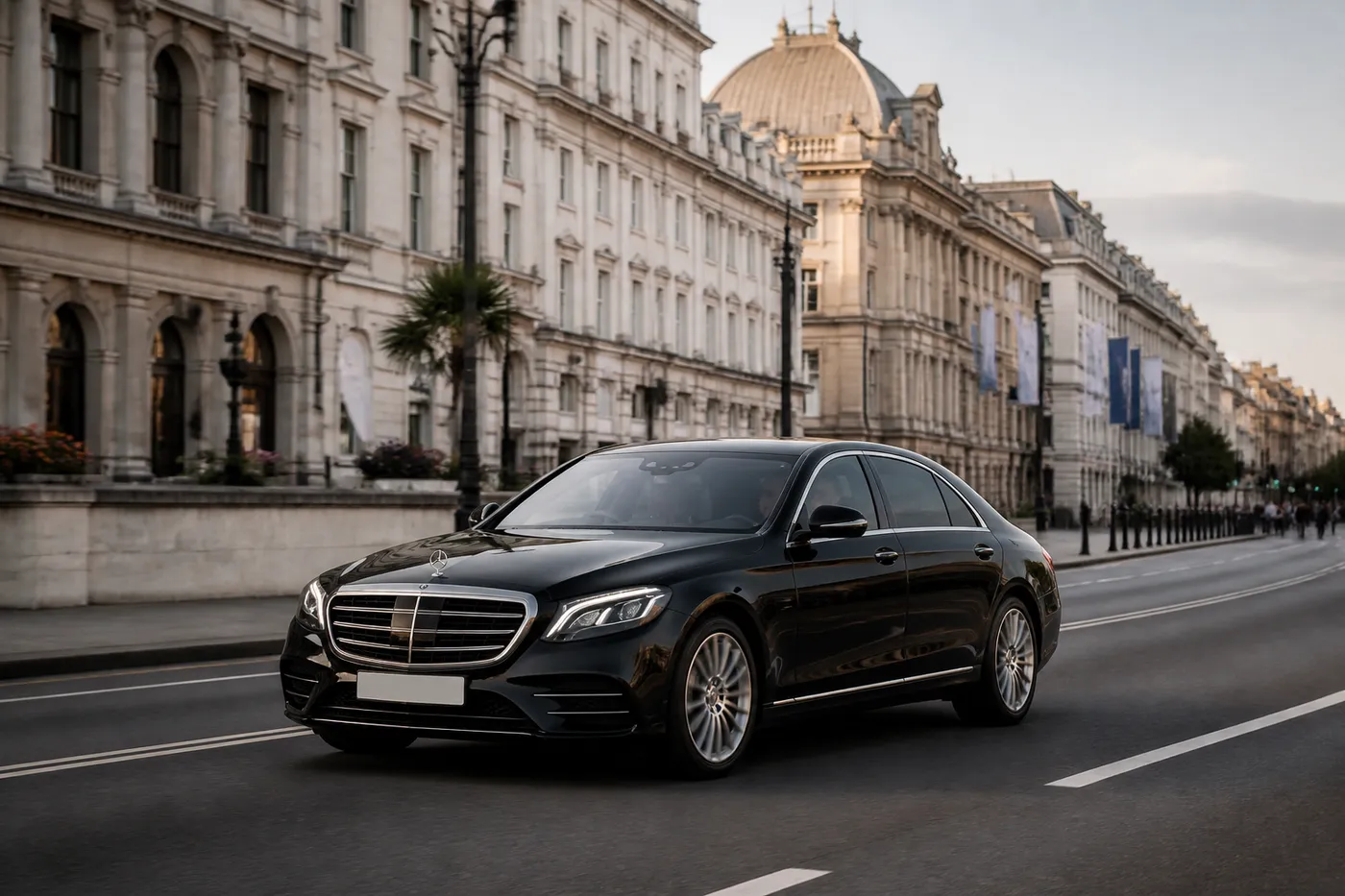
There is no standing price list here, because a printed figure cannot know your journey. Price follows the vehicle rather than the occasion, so nothing costs more because of what you are dressed for — and the written quotation fixes the figure before you travel.
First Class Chauffeurs does not publish a standing price list. Every journey is priced on its own facts — the vehicle, the hours the car is held, where it has to come from and where it can legally wait — and confirmed in writing before you travel. Price follows the vehicle rather than the occasion, so the same car is quoted the same way whether it is booked for an airport transfer or a wedding. Send the date, the pick-up and the destination on WhatsApp and the written quotation confirms the price, what it includes and any applicable tax. There is no form to fill in.
Priced on
The journey, not the occasion
Vehicles
12
Currency
GBP
Quotations
In writing, before you travel
01/Overview
Figures you can plan against
Chauffeur pricing has a reputation for being obtainable only on request, which usually means it moves depending on who is asking. It does not move here. The same six things decide every quotation this desk writes, they are named further down this page, and they are the same six whoever is asking.
What a printed table cannot do is know your journey. A collection from a Cotswolds village at half past four in the morning and a collection from Belgravia at noon are not the same job even in the same car, and the honest way to handle that is a written quotation rather than a footnote. So choose the cabin that suits the party and the luggage, message the journey, and the figure comes back with the vehicle named on it.
02/At a glance
How a quotation reaches you
One message, no form, and a figure that does not move once it is written.
Vehicles
12
Cabin classes
6
How to ask
WhatsApp, one message
Turnaround
Usually within the hour
03/The fleet
What each cabin carries
Ordered from the everyday cabin up to the Signature cars. Seats and cases are the two facts that decide which one your journey needs.
Once you know these, nothing on a quotation from us should ever be a surprise.
01
The vehicle sets the rate
Not the service, not the occasion and not the postcode you are collected from. The same car is quoted the same way all week.
02
Blocks are minimums, not packages
A four-hour minimum means four hours are chargeable. Hours after that are added at the same rate, not at a higher one.
03
Transfers are priced on the run
A point-to-point job is quoted as a journey rather than by the hour, because that is what it is.
04
The quotation is the contract
It names the figure, what it covers and any applicable tax. Nothing reaches an invoice that was not on it first.
05/Detail
The logic behind the figure
LF-01/Why rates are set by car, not by occasion
Why rates are set by car, not by occasion
A chauffeur company can price two ways. It can charge by what you are doing, which is how a wedding quietly becomes more expensive than the identical journey to a hotel, or it can charge by what it costs to put a particular car and a particular chauffeur on the road for an hour. This site does the second.
So a Mercedes-Benz S-Class is quoted the same way whether it is standing outside a register office or a data centre in Slough. What changes between bookings is the shape of the work: how many hours the car is held, how far it travels before it reaches you, and what time of day it starts.
That has an obvious consequence worth saying plainly. If a cheaper cabin does the job, book the cheaper cabin. Nothing about the driving changes.
06/Variables
What moves a quotation up or down
Six things the desk looks at before it writes a figure. None of them is a surprise once it is named.
01
Positioning
Where the car starts from. A rural collection at dawn carries mileage nobody is sitting in.
02
Hours held
Whether the car waits between stops or is released. This is the single largest lever on most bookings.
03
Cabin chosen
The step from a Cabin saloon to a Suite is a real difference in cost, and a real difference in the back seat.
04
Where it can wait
Some forecourts are drop-only. If the car must sit in a paid car park, that is part of the arithmetic.
05
Duty hours
A day long enough to need a second chauffeur is a different quotation, and the paperwork says so plainly.
06
Legs quoted together
An outbound and a return on one quotation share their positioning. Two separate bookings do not.
07/Detail
Where the money actually goes
LF-02/What actually moves a figure
What actually moves a figure
Distance is the least interesting variable. The ones that move a quotation most are the invisible ones: where the car has to come from before it reaches your door, where it can legally wait once it arrives, and whether the hours land inside a single chauffeur duty period or need a second chauffeur to finish the day.
An early collection from a village in Sussex costs more than a Mayfair collection at the same hour, not because the run is longer but because the car has to be positioned there overnight or driven out empty. Equally, a return leg booked on the same quotation is usually cheaper than the same leg booked separately, because the positioning has already been paid for once.
Time of day matters at the margins rather than as a blanket surcharge. Motorway work at three in the morning is quicker and more predictable than the same route at five in the afternoon, and the quotation reflects the hours the car is actually held.
08/Waiting
How waiting time is treated
There is no universal figure here, and any site that prints one is guessing on your behalf.
Waiting is the part of chauffeur pricing that catches people out, because it is handled differently depending on where the car is standing. A hotel forecourt at eleven in the morning and an arrivals hall behind a delayed inbound are not comparable situations, and pretending otherwise leads to a charge nobody expected.
So each quotation names the allowance it includes and what happens beyond it. Airport collections carry more of it as a matter of course, because the arrival time follows the aircraft rather than the schedule, and because the chauffeur is already inside the terminal watching the board rather than sitting in a car park waiting to be called.
On as-directed work the question mostly disappears. If the car is held for you by the hour, waiting is simply what the car is doing.
Airport collections
Allowance stated on the quotation
Address collections
Allowance stated on the quotation
As-directed hire
Waiting is the booked time
Beyond the allowance
Confirmed in writing first
Flight tracking is how the allowance stays useful. Each airport page explains where the chauffeur waits at that terminal and why it matters.
09/Detail
Blocks, half days and overruns
LF-03/Hourly work, half days and minimum blocks
Hourly work, half days and minimum blocks
As-directed hire is sold in blocks because the car and the chauffeur are committed to you for that stretch whether you use all of it or not. The minimum block varies by vehicle - shorter on the everyday cabins, longer on the Signature cars, which reflects how those vehicles are actually booked - and your quotation names the block that applies to yours.
A half day is simply that minimum block, quoted as one figure. There is no hidden discount and no hidden premium in it, and hours beyond the block are added at the same rate rather than at a different one.
Point-to-point transfers work differently. They are priced on the journey rather than by the hour, which is why a run to a terminal and an afternoon of city stops are quoted as two different kinds of work even in the same car.
10/Changes
Amendments and cancellations
What to do when a plan moves, which on this kind of work it frequently does.
A time that has shifted
Reply on the thread the quotation came back on. A collection moved by an hour is normally a note in the diary and nothing more.
A different vehicle
Ask as soon as you know. Swapping cabins changes the figure, and the revised quotation is reissued rather than adjusted verbally.
A cancellation
The terms that apply are named on your quotation and in the published terms, since they vary by vehicle and by how close to the date the change lands.
11/The note that travels with every mention of cost
Why nothing on this site carries a figure
No standing price list. Send the journey on WhatsApp and the written quotation confirms the price, what it includes and any applicable tax.
That sentence stands in for the pricing page this site deliberately does not print. The quotation is the document that fixes what you will pay, it names what the figure covers and any applicable tax, and nothing reaches an invoice that was not on it first.
A published pricing page sounds helpful and rarely is. It cannot know that your collection is a Cotswolds village at half past four in the morning rather than Belgravia at noon, and the gap between the printed figure and the real one is where most of the unpleasant surprises on this kind of work live. So nothing is printed, and the quotation does the job properly instead.
The quotation is the document that binds. It names the vehicle, the chauffeur arrival time, the route as we intend to drive it, the waiting allowance included, the price, what that price covers and any applicable tax. Nothing is charged that is not on it, and anything added afterwards is confirmed in writing before it appears.
13/By journey
How each kind of booking is priced
The same logic underneath, applied four different ways.
Nine answers about how a figure is arrived at and what it commits to.
Why are there no prices on this website?
+
Because a printed figure cannot know your journey, and the gap between it and the real price is where the unpleasant surprises live. Every booking is quoted on its own facts - the vehicle, the hours, the positioning and the waiting - and confirmed in writing before you travel. Message the journey on WhatsApp and the figure usually comes back the same day.
Why is the minimum block longer on some cars than on others?
+
It follows how each vehicle is actually booked. The Signature cars are almost always taken for a day rather than an errand, and holding one of them for ninety minutes takes it out of the diary for far longer than that. The everyday cabins are the ones people genuinely use in short blocks, and they carry the shorter minimum.
Is the return leg cheaper than two separate bookings?
+
Usually, because the positioning mileage is only paid for once. Sending the outbound and the return as one enquiry lets the desk quote them together rather than as two unrelated jobs that happen to share a passenger.
How is waiting time handled?
+
Every quotation states the waiting allowance it includes and what happens beyond it, so there is no standard figure to memorise here. Airport work carries more allowance than a hotel collection for the obvious reason that a landing time is a moving target and a lobby is not.
What happens if the journey runs longer than booked?
+
On as-directed work, additional hours are added at the same rate as the booked ones rather than at a penalty rate. On a transfer, a materially different route or a long unscheduled wait is confirmed with you in writing before it is charged.
How do cancellations work?
+
The cancellation terms that apply to your booking are set out on the written quotation and in the published terms, because they depend on the vehicle and how close to the date the change comes. Tell the desk as early as you can and it will usually be straightforward.
Do you charge for congestion, tolls or parking?
+
The quotation says exactly what the figure covers, including road charges where they apply to your route. Nothing appears on an invoice that was not named on the quotation you accepted.
Can I hold an account rather than pay per journey?
+
Account arrangements are agreed case by case with the reservations desk. How a journey is priced does not change; what changes is how and when the invoicing happens.
How are long-distance journeys priced?
+
On the run itself rather than on an hourly block, because a four-hour motorway leg and four hours of city stops are different pieces of work. Send the two ends of the journey on WhatsApp and the desk will quote it as a single movement.
The fleet above will get you to the right vehicle. Message the date, the pick-up and the destination on WhatsApp and the written quotation will fix the price for your journey.