Skip to content
FCFirst ClassCHAUFFEURS

CHThe role

What a chauffeur does before you see the car

The driving is the last part, and the easiest. Everything that decides whether a collection works happens earlier, in a brief nobody shows you and a decision about which door a car can actually stop at.

  • Briefed before the day
  • Met inside the terminal
  • Luggage handled
  • No names invented
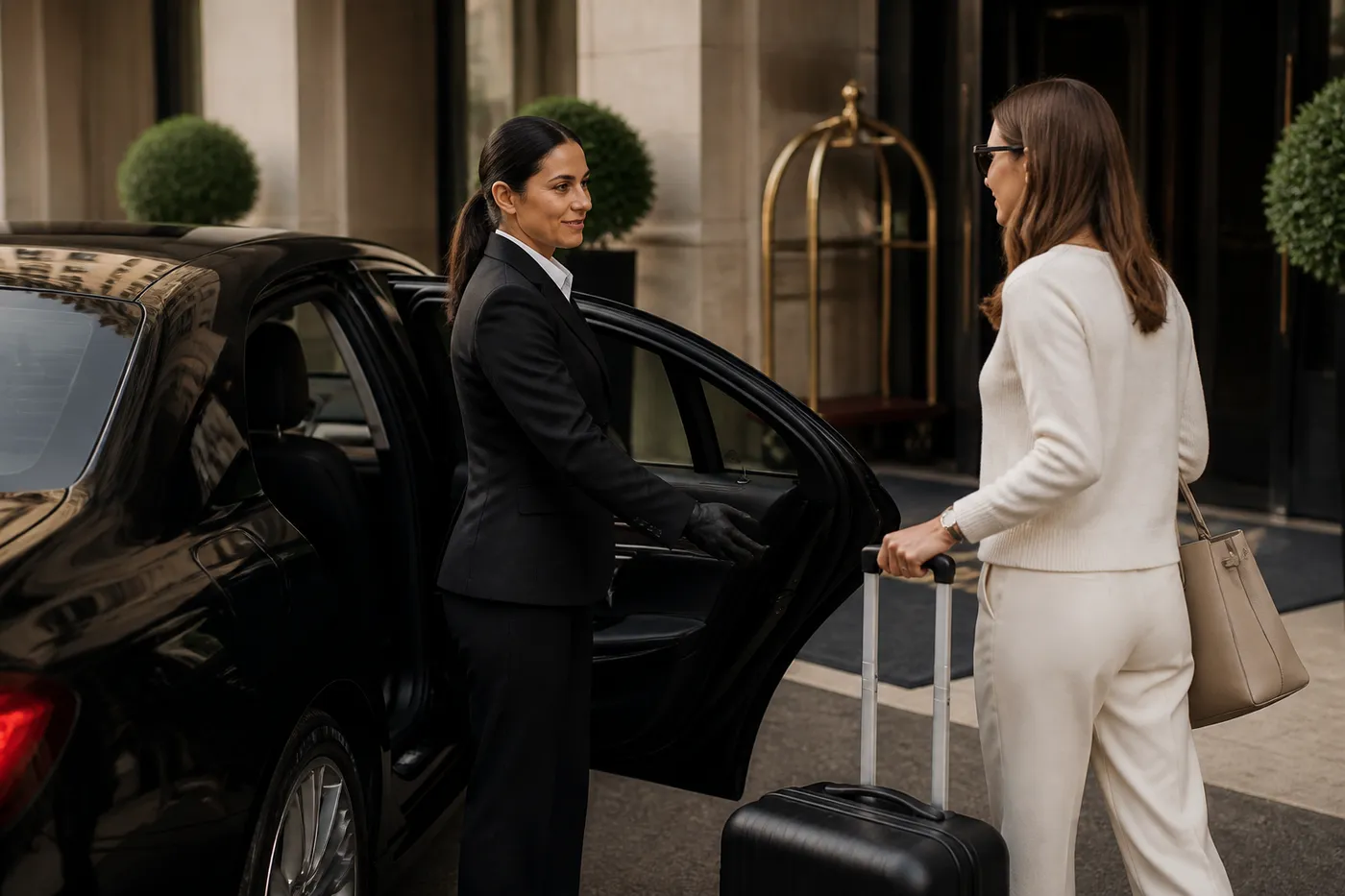
A chauffeur holding the rear door open for a passenger

Written quotation, usually within the hour

The chauffeur role: summary

A First Class chauffeur prepares before the day rather than improvising on it: the address, the door, the waiting position and the route are known before the car leaves, and where a flight is involved the collection time follows the aircraft. On arrival the chauffeur stands where a passenger will see them, handles luggage, and drives so the rear cabin stays quiet enough to work, sleep or take a call. Passengers can ask for a route change, a stop, silence, or help to the door. This site names no individual chauffeurs and publishes no vetting, licensing or accreditation claims.

Before the day

Address, door, waiting position and route confirmed.

On arrival

Met inside the terminal where the building permits it.

During the journey

Conversation or silence, whichever you ask for.

Not published here

Names, portraits, vetting or accreditation claims.

01Overview

A craft, described honestly

Chauffeuring looks, from the pavement, like driving. Most of it is not. The driving is the last and easiest part of a sequence that begins hours earlier with a postcode, a satellite image of a hotel forecourt and a decision about which of two entrances a car can actually stop at without being moved on.

This page describes that sequence. It does not introduce anyone by name, and there are no portraits below captioned as members of staff, because a photograph with a first name under it is the easiest thing on a website to invent. What can be set out honestly is the shape of the job and what you are entitled to ask of the person doing it.

02At a glance

Four fixed points in the job

These do not change with the vehicle, the service or the postcode.
Arrival
Before the booked time
Terminal meets
Inside, not from a car park
Luggage
Handled to the door
Cabin
Set for the passenger

03Preparation

Before the car moves

The work that happens before the car moves

LF-01The work that happens before the car moves

The work that happens before the car moves

A booking reaches the chauffeur as a brief, not as a pin on a map. It carries the passenger name, the exact door rather than the building, the number of cases, anything fitted in advance such as a child seat, and any note you added about how you would like the collection handled.

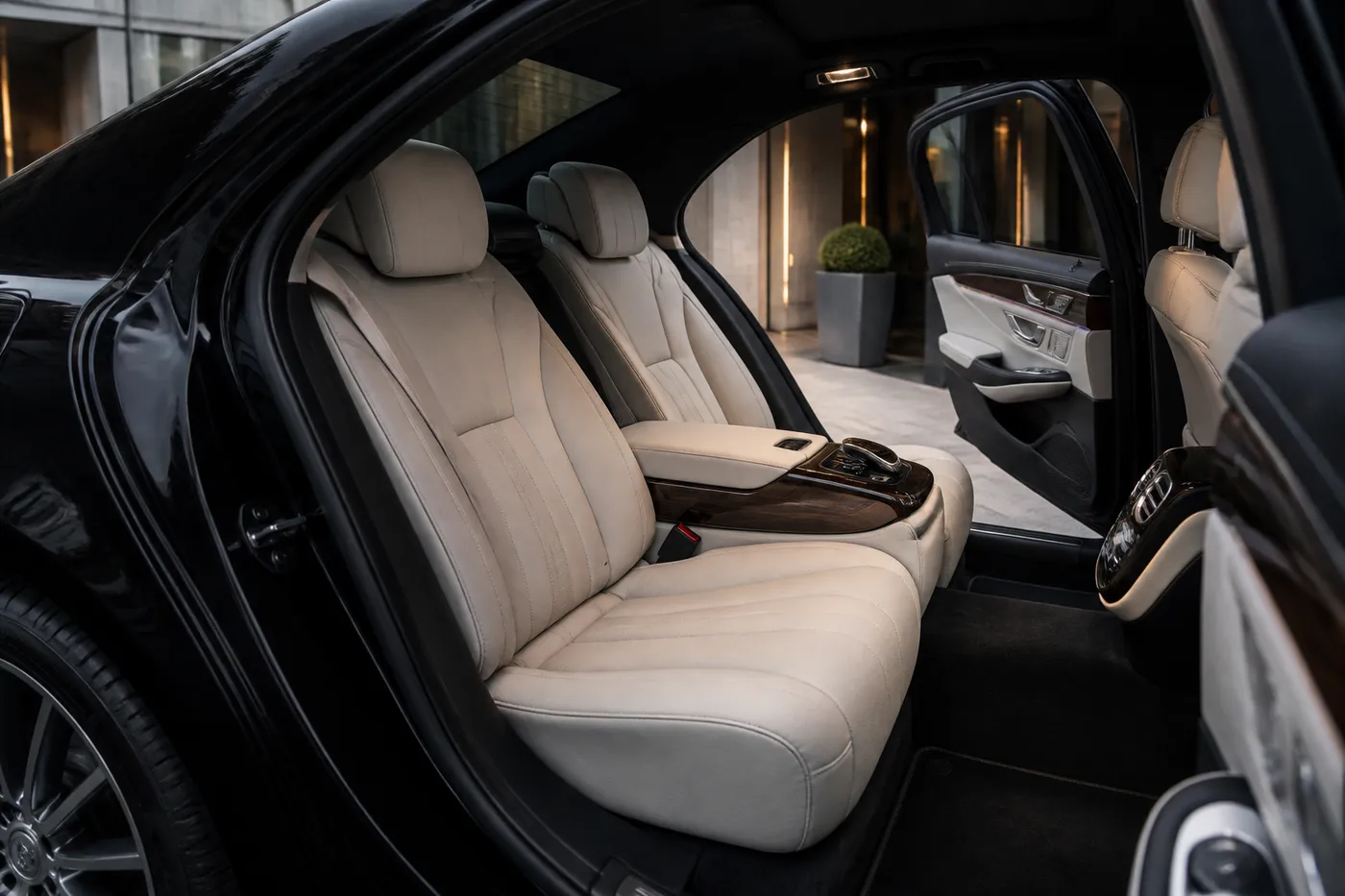
The car is checked before it leaves: fuel for the whole run and the return, screen wash, tyre pressures, and a cabin that has been cleared of the previous journey rather than tidied around it. Water goes in the door pocket. If a seat has been fitted, it is fitted then, at a standstill, with time to get it right.

Then comes the part that decides the whole booking. The chauffeur works out where the car can legally stop at the far end, and how long the walk is from that spot to where you will actually be standing. Get that wrong and everything afterwards is recovery.


04The sequence

A collection, step by step

The same four movements whether the pick-up is a terminal, a hotel or a house at the end of a lane.
  1. 01

    The brief

    Name, exact door, case count, anything fitted in advance, and any note you added about how you would like the meet handled.

  2. 02

    The approach

    Departure timed to absorb one bad junction, with the legal waiting position at the far end already decided rather than discovered.

  3. 03

    The meet

    Standing still, in the sightline, board readable from twenty feet. Luggage taken before anything else is discussed.

  4. 04

    The drive

    Anticipation rather than speed, a cabin set for the person in it, and the route open to change if you would rather go another way.

05Timing

Arriving early on purpose

Leaving early enough to absorb one bad junction

LF-02Leaving early enough to absorb one bad junction

Leaving early enough to absorb one bad junction

The car is at the collection point before the booked time, not at it. That sounds like a small distinction and it is the whole discipline: a chauffeur who plans to arrive exactly on time has no room for a closed lane, a diverted road or a barrier that will not lift.

How much room is built in depends on the run. A ten-minute hop across Marylebone needs less padding than a five in the morning collection from a village with one road out of it. The chauffeur makes that judgement per journey rather than applying a blanket margin, which is why the arrival time on your quotation is a considered figure and not a default.

06The meet

Being findable in an arrivals hall

Standing where a passenger can see you

LF-03Standing where a passenger can see you

Standing where a passenger can see you

Meeting somebody in an arrivals hall is a skill with almost nothing to do with driving. The chauffeur has to know which exit that particular flight will use, which is not always the one the signage suggests, and where the flow of people from that exit actually goes once it clears the doors.

Then they have to be visible to somebody who is tired, pushing a trolley and looking at head height rather than at a crowd. That means standing still, in the sightline, with the board held where it can be read from twenty feet away, and not drifting toward a coffee queue during the fifteen minutes when it matters.

It also means waiting properly. A flight that lands and then sits on a stand for half an hour is a normal event, and a chauffeur who has gone back to the car park in the meantime has turned a good arrival into a phone call.

07The driving

Anticipation, not speed

Driving so the back seat forgets it is moving

LF-04Driving so the back seat forgets it is moving

Driving so the back seat forgets it is moving

Smooth is not slow. It is anticipation: reading the lights three ahead rather than the one in front, braking early and gently rather than late and firmly, and taking a roundabout at a speed that does not send a laptop across a seat.

The measure of it is whether a passenger can read, sleep, or hold a phone call without the other end being able to tell they are in a car. That is achievable in any of the cabins on your quotation, and it has more to do with the person at the wheel than with the badge on the bonnet.

Climate is part of the same job. A rear cabin set for the person in it, rather than for the driver, is one of those details nobody mentions when it is right.

08On board

What travels as standard

Small things, none of them charged for, all of them noticed only when they are missing.
A chauffeur in a plain dark suit, standing ready beside the car
  • Bottled water in the door pocket, replaced between bookings.
  • A cabin cleared of the previous journey rather than tidied around it.
  • Charging for the seat you are actually sitting in, where the car provides it.
  • An umbrella, which matters more often in this country than it should.
  • A name board for terminal meets, held where it can be read at a distance.
  • Climate set before you get in, not adjusted after you mention it.

09Judgement

Reading the passenger

Reading what the passenger actually wants

LF-05Reading what the passenger actually wants

Reading what the passenger actually wants

Some passengers want the day discussed. Others want to be met with a nod and left alone until the destination. A chauffeur who cannot tell the difference within the first minute will get one of those two wrong for the whole journey.

The cues are ordinary. Somebody who takes out a laptop before the seatbelt is on is working. Somebody who asks about the traffic is opening a conversation. Somebody stepping off an overnight flight generally wants a bottle of water, a warm cabin and silence, in that order.

None of this requires guessing. If you would rather set the terms yourself, say so at the start; it is a normal request and it makes the journey better for both people in the car.

10Your call

What you can ask for

None of this is an imposition, and none of it is billed as an extra.
What you can ask for

LF-06What you can ask for

What you can ask for

None of the above is an imposition and none of it is charged as an extra. The only thing that affects a figure is time: a materially longer route or a long unscheduled wait is confirmed with you in writing before it changes anything.

The one request that needs notice rather than a word on the day is equipment. Child seats, boosters, accessible access and extra luggage capacity are arranged before the car sets off, because none of them can be produced at a kerb.

  • A different route, or one that avoids a particular road.
  • A stop on the way, for a coffee, a chemist or five minutes of air.
  • Silence, or conversation, whichever you prefer.
  • Help with luggage all the way to a reception desk rather than to the kerb.
  • A hand to the door for a passenger who is unsteady on their feet.
  • The heating, the ventilation or the seat adjusted without having to ask twice.
  • A wait while you finish a call before the car pulls away.

11Position

No names, no badges

Why there are no chauffeur profiles on this site, stated plainly.
What this page does not claim

LF-07What this page does not claim

What this page does not claim

There is no statement here about background checks, licensing bodies, training schemes or years of experience, and no chauffeur is named or pictured as an employee. Those claims are easy to write and impossible for a reader to verify, and none of them has been confirmed for publication on this site.

What is described instead is the standard of work the booking is planned to, which is the part you will actually experience. If something specific matters to you before you travel, ask the reservations desk directly and you will get a straight answer rather than a badge.

The same rule governs the rest of the site, and the about page sets out the full list of claims that are deliberately absent. Anything you want confirmed before travelling, ask the reservations desk. Reservations answered around the clock, every day of the year.

12Answers

About the person driving

Six answers about the role, the day and what you are entitled to ask for.

Will I know who is driving before the day?

You are told the chauffeur is confirmed and how to reach them through the reservations line. This site publishes no chauffeur profiles, because a page of names and portraits is the easiest thing on a website to fabricate and the hardest for a reader to check.

Do you publish vetting or licensing details?

No. No claim about background checks, accreditation or licensing appears anywhere on this site, because none has been confirmed for publication here. If that matters to your booking, put the question to the reservations desk and you will get a direct answer rather than a badge on a page.

Will the same chauffeur stay with me all day?

On most bookings, yes. Where a day runs longer than a single chauffeur may legally drive, a second one takes over and the quotation names that arrangement in advance rather than leaving it to appear at a service station.

Can I ask the chauffeur not to make conversation?

Yes, and it is a common request that nobody takes personally. Say it at the start of the journey, or add it to the notes when you book, and the cabin stays quiet unless you open it.

Does the chauffeur carry luggage into a building?

To a reception desk, a check-in desk or a front door, unless you would rather handle it yourself. Cases are loaded and unloaded by the chauffeur as a matter of course, not on request.

What does the chauffeur do while I am in a meeting?

On as-directed work, the car is held for you, so the chauffeur parks somewhere legal within reach and waits. You get a message with where they are, and the car is back at the door before you reach it rather than after you have called.

FCReservations

The work shows up at the kerb, not on a page.

Send a date, a pick-up and a destination. The quotation names the car and the arrival time, and the rest of it you will see for yourself.

Hours
Reservations answered around the clock, every day of the year.
CallGet a quote