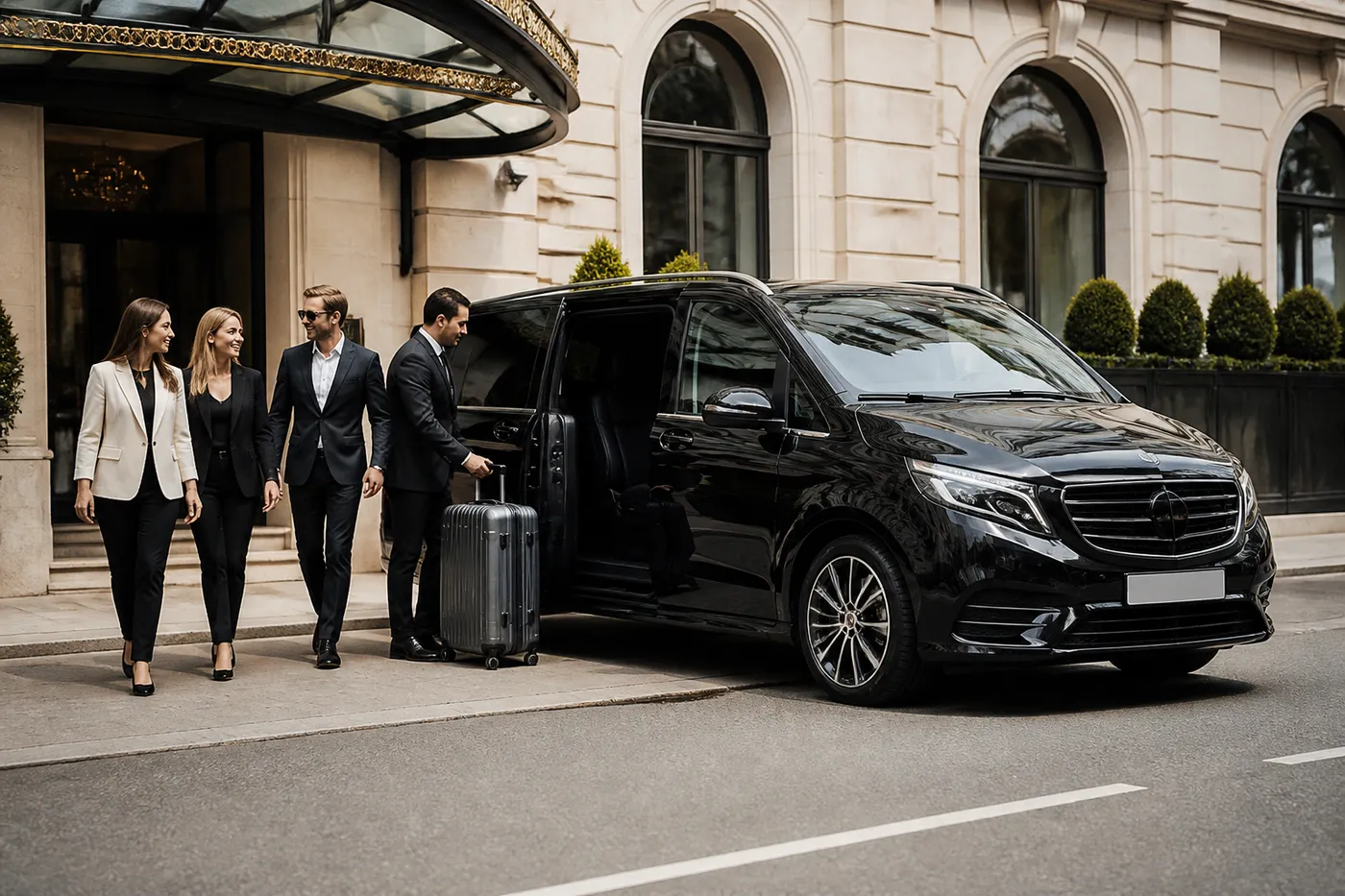
Airport chauffeur transfers across the United Kingdom
Twenty-two airports, from Heathrow to City of Derry. Met inside the terminal with a name board, the flight watched from the moment it lands, and the fare fixed in writing before you fly.
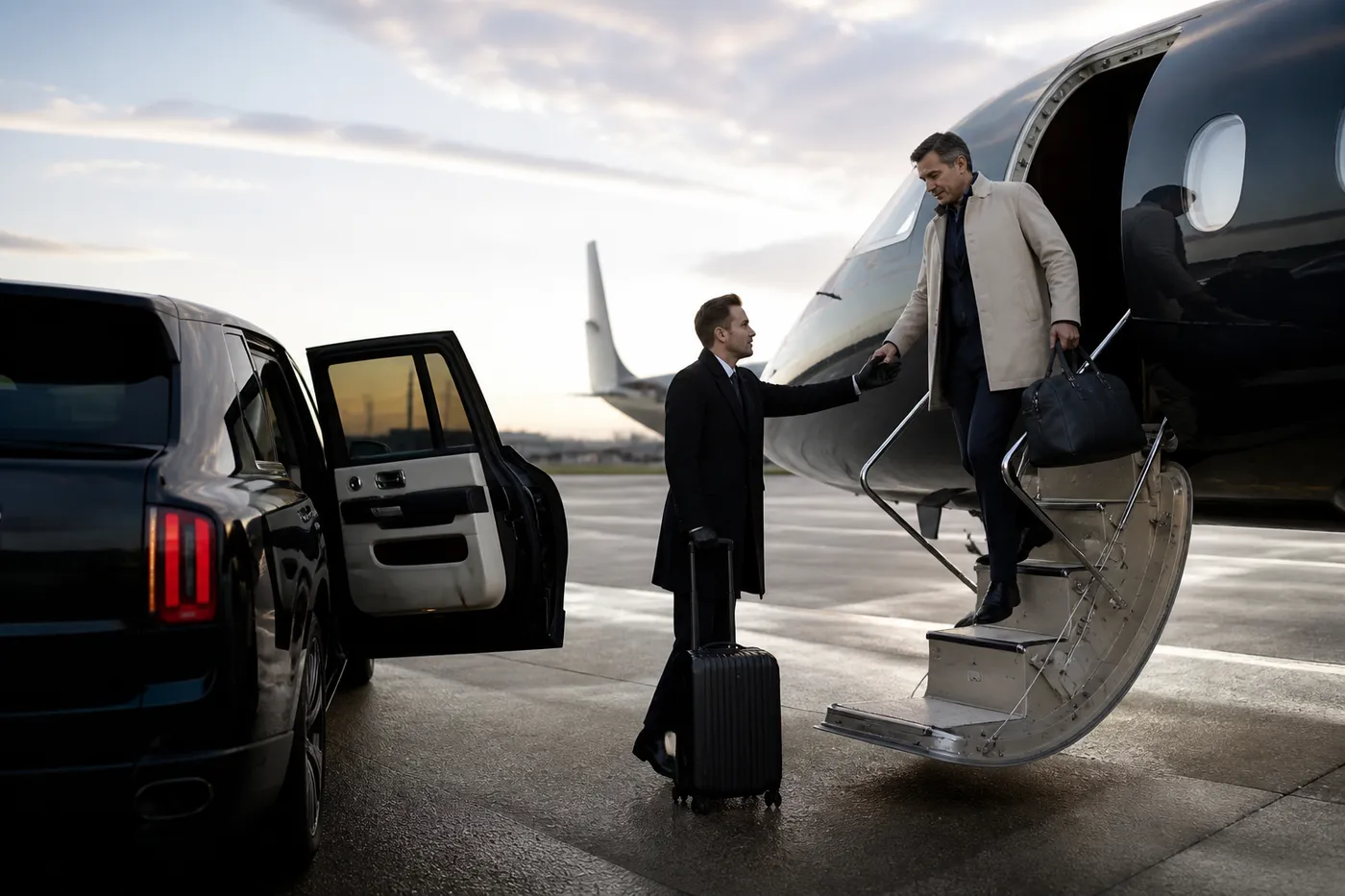
First Class Chauffeurs provides chauffeur-driven airport transfers at twenty-two airports across the United Kingdom. The six airports serving London are covered in full: Heathrow with Terminals 2, 3, 4 and 5, Gatwick with its North and South Terminals, London City, Luton, Stansted and Southend. Three business aviation airfields are covered separately because they work differently: Farnborough, London Biggin Hill and RAF Northolt, where bookings run against an aircraft registration and a handling agent rather than a flight number and an arrivals board. Thirteen regional airports complete the list: Manchester, Birmingham, Bristol, Edinburgh, Glasgow, Leeds Bradford, Liverpool, Newcastle, Southampton, Cardiff, Belfast International, George Best Belfast City and City of Derry. On every scheduled arrival the passenger is met inside the terminal with a name board rather than telephoned from a car park, the inbound flight is tracked so a delay moves the collection instead of losing it, and the quoted fare includes airport parking and a waiting allowance measured from the actual landing. Departures are timed backwards from the check-in deadline. No standing price list is published: every transfer is quoted on its own routing and the written quotation confirms the final price, what it includes and any applicable tax.
Airports covered
20 across the UK
London
All six airports
Private airfields
Three, by tail number
Arrivals
Met inside, flight tracked
01/Overview
The ground half of the flight
A first class itinerary usually has a premium cabin in the middle of it and two weak ends. The part that goes wrong is almost never the flight; it is the forty minutes after the aircraft door opens, when a booked car turns out to be in a car park somewhere expecting a phone call. This is the half of the journey we do.
Every airport on this site has a page of its own because every airport is a different job. Heathrow has four terminals on two sites. Gatwick has two buildings that airlines have moved between. Northolt is a Royal Air Force station that lets civil aircraft in by permission. Writing one page and pretending they are interchangeable would be quicker and would not help anybody standing in an arrivals hall.
02/At a glance
What this covers
Every airport below has a page of its own, because terminal detail does not generalise.
Airports covered
20 across the UK
London
All six airports
Private airfields
Three, by tail number
Arrivals
Met inside, flight tracked
03/Included as standard
What an airport transfer includes
01
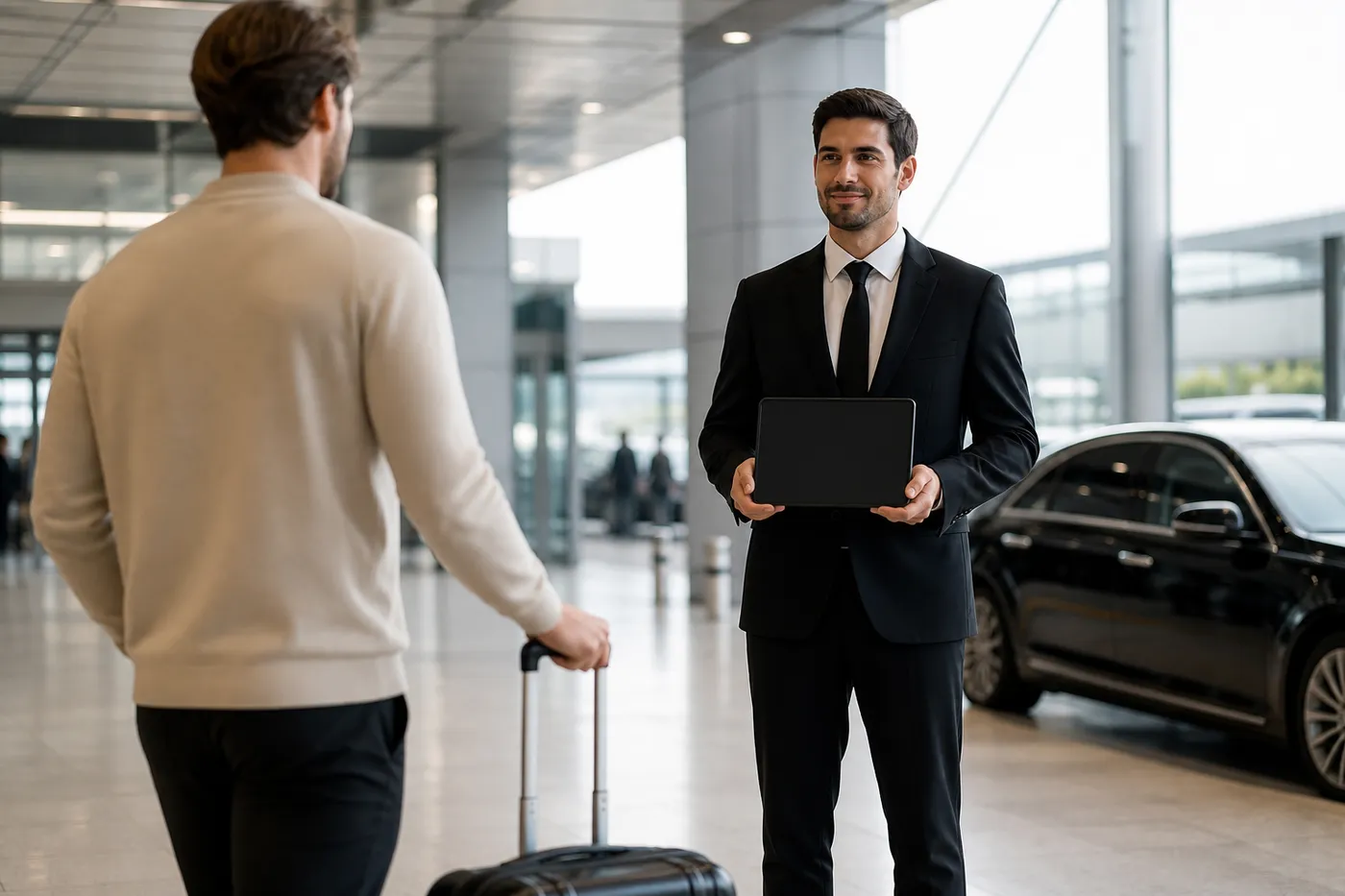
A meet inside the building
The chauffeur parks, walks in and stands where arriving passengers actually come out, holding a name board. Nobody is directed to a car park by text message.
02
The aircraft watched, not the clock
Bookings run against a flight number, so the collection moves when the flight moves. An early landing is met early; a late one costs you nothing extra.
03
Waiting time inside the fare
The arrivals allowance runs from the actual landing rather than the scheduled one, which is what absorbs a slow border queue or a bag that takes an hour to appear.
04
Airport parking in the figure
The car park charge for the meet is part of the quoted price. Nothing appears at the barrier and there is nothing for you to reimburse afterwards.
05
The chauffeur named beforehand
You get a name, a mobile number, the vehicle and its registration the day before, so the person holding the board is somebody you were already expecting.
06
One price, agreed in writing
The quotation states the vehicle, the arrival time, what is covered and the figure. It is not a base fare with a list of things added later at the kerb.
04/Who books it
Four kinds of airport enquiry
Each of these wants something slightly different from the same journey, and the booking is built accordingly.
01
The weekly commuter
Out on the first departure, back on the last arrival, often into a different airport from the one they left. What they want is the same chauffeur, no conversation at six in the morning, and a car that is already there.
02
Families and groups
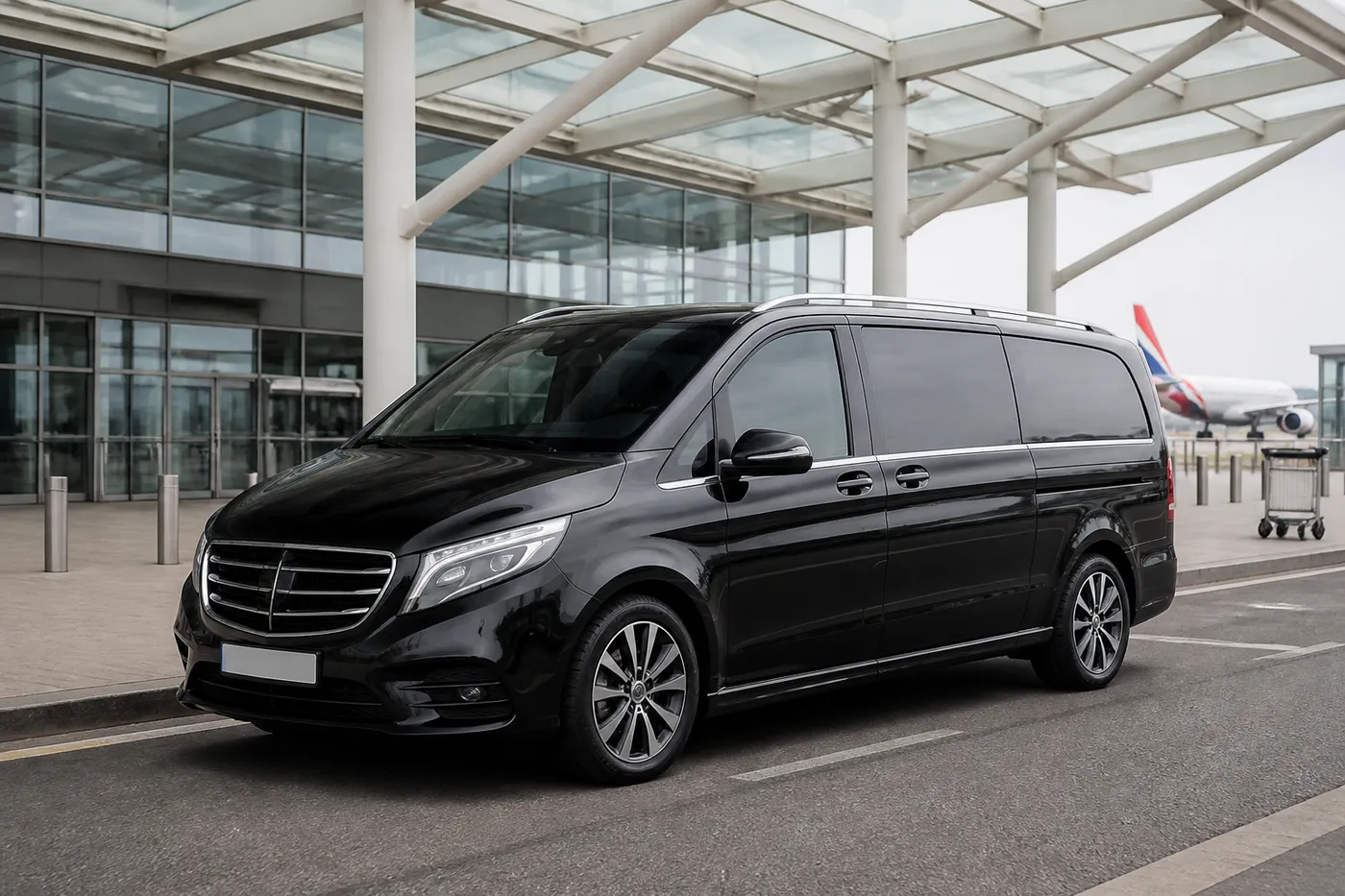
Where the failure is nearly always luggage rather than seats. Four adults fit in a saloon; four adults with four large cases and a pushchair need a people carrier, and that is settled at the booking stage.
03
Private aviation passengers
No arrivals board, no flight number, and a handling agent who decides how close a car may get to the aircraft. Those movements are booked against a tail number and run through the handler.
04
Visitors arriving in Britain
Long-haul, jetlagged, and often heading somewhere with an address that a mapping application will not find. Being met inside the terminal matters most to the people who have never been in it before.
05/How it works
How an airport meet runs
Five steps. Four of them are finished before the aircraft is on stand.
Step 01
Send the flight number
Not just the landing time. A booking tied to a flight number can follow the aircraft; one tied to a clock cannot, and that single detail is what makes the rest of this work.
Step 02
We confirm the terminal
Taken from the live arrivals feed on the day rather than from an itinerary printed in March. Airlines move between buildings, and codeshares are not always where the booking says.
Step 03
The car parks before you land
Your chauffeur is in the short stay for your terminal while the aircraft is still inbound, so an early clearance through the border finds a car already waiting.
Step 04
You are met with a board
Inside the hall, in sight of the doors you come through. The chauffeur takes the trolley there rather than at the kerb, and walks you out to the car.
Step 05
Loaded, and away
Bags in, route already decided, and no negotiation about the price at the end of it. The figure was agreed in writing before you flew.
06/London
The six airports that serve London
Four terminals at one of them, two at another, and four single-terminal airports on the edges of the city. They are not interchangeable, and the page for each says why.
LF-01/The forty minutes nobody plans and everybody feels
The forty minutes nobody plans and everybody feels
Airlines sell the middle of a journey and measure it carefully. The ground segment at either end is measured by nobody, which is why it absorbs most of the wasted time on a trip. An hour lost between an aircraft door and a hotel front desk does not appear on any timetable, and it is the hour people remember.
Our whole proposition is that stretch. It is unglamorous work: knowing which car park serves which terminal, knowing that a particular arrivals hall has two exits and only one of them is used, knowing that the road out of an airport backs up at a specific hour. None of it photographs well and all of it saves time.
07/Private aviation
Business aviation airfields
No arrivals hall, no public board and no flight number. These three are booked against an aircraft registration and run through a handling agent.
Apron access for vehicles is granted by the handler on the day, never by us in advance. The private aviation page explains how those movements are planned.
LF-02/Met inside, or telephoned from a car park
Met inside, or telephoned from a car park
There are two ways to run an airport pick-up. In the first, the driver waits in a car park and calls when you have landed, and you find each other somewhere on a forecourt. It is cheaper to operate and it is the reason airport transfers have the reputation they do.
In the second, the chauffeur parks, pays, walks into the terminal and stands where you will come out. That is what we do on every scheduled arrival, at every airport on this list. It costs us a parking charge and twenty minutes of a chauffeur’s day, and it is the difference between arriving and being collected.
08/The regions
Regional airports across the United Kingdom
Thirteen airports from Manchester to City of Derry, each with the local detail that only shows up if you drive there weekly.
The most common reason an airport transfer fails is that it was booked against a landing time. Aircraft do not respect landing times. They arrive forty minutes early because of a tailwind, or two hours late because of a slot at the other end, and a booking made against a clock has no way of following them.
A flight number solves it completely. The chauffeur can see the aircraft, see the revised time, see the stand and the terminal, and adjust without anybody telephoning anybody. That is why it is the first question on every airport enquiry we take, and why we will gently insist on it.
09/The cars
Choosing a cabin for the run
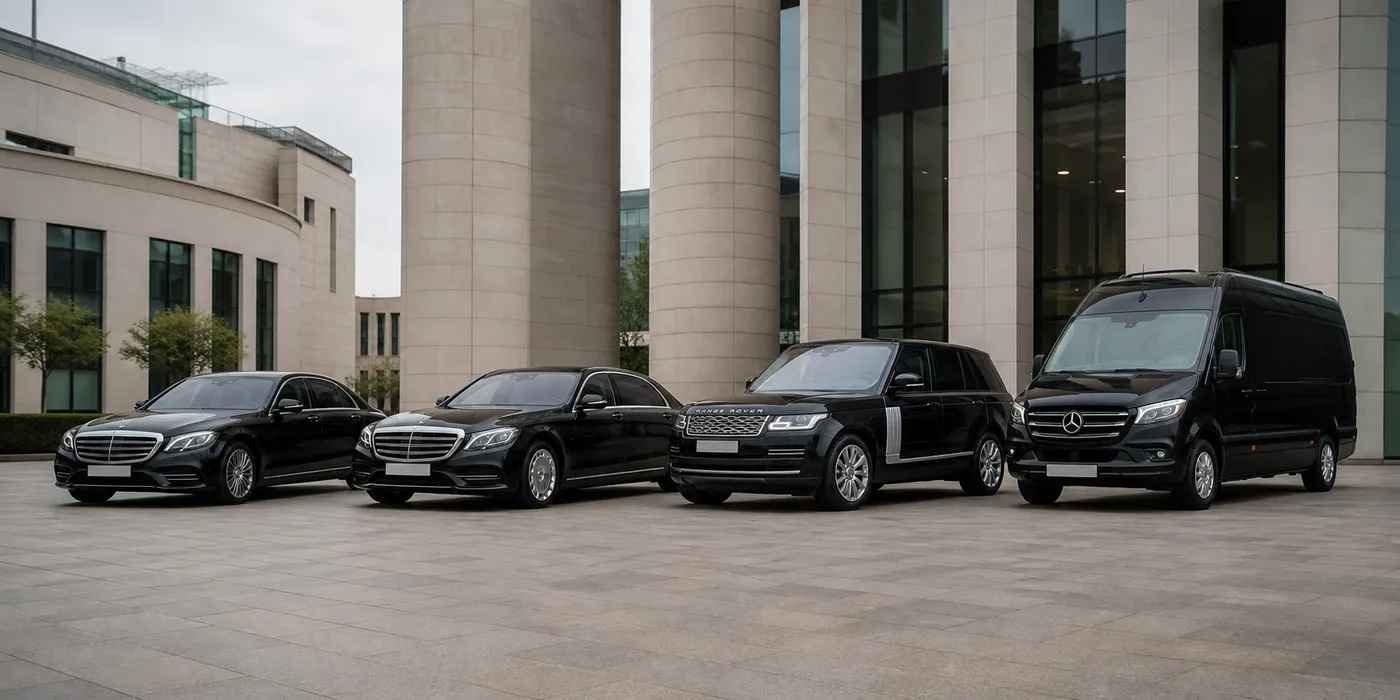
Seats and cases decide the vehicle; the vehicle and the routing decide the fare. Every transfer is quoted individually against the actual journey.
LF-04/Cases decide the car more often than people do
Cases decide the car more often than people do
The single most avoidable failure in airport work is a vehicle that physically cannot take what has come off the belt. A saloon seats three passengers comfortably and takes two large cases; it does not take four, and no amount of good will in a car park changes that.
So we ask the dull question when the booking is taken: how many bags, and what shape. Golf clubs, ski bags, cellos, pushchairs and film equipment all have dimensions that matter more than passenger count. Answer it once and the right car turns up.
LF-05/Terminals and airfields are not the same job
Terminals and airfields are not the same job
A scheduled airport has an arrivals hall, a public board and a predictable sequence: aircraft, border, belt, doors. A business aviation airfield has none of those. There is a handling agent, an estimated time of arrival that moves, and a decision about whether a car may go near the aircraft that belongs to somebody other than us.
That is why Farnborough, Biggin Hill and Northolt are separated out below rather than folded in with the rest. They are booked differently, briefed differently and confirmed differently, and Northolt in particular needs vehicle and driver details submitted well in advance because it is a Royal Air Force station rather than a commercial airport.
10/Coverage
Where we drive from these airports
London based, driving the whole of the United Kingdom.
Drive times are indicative ranges rather than promises. The coverage index lists every town and area we collect from, and long-distance journeys run city to city with one chauffeur throughout.
LF-06/One standard of welcome, in Aberdeen and in Mayfair
One standard of welcome, in Aberdeen and in Mayfair
It is easy to run a good service at Heathrow, where the volume justifies it. The harder test is whether the same thing happens at a small terminal on a wet Tuesday in February, with one arrival and nobody watching.
The answer has to be yes, or none of the rest means anything. The chauffeur still parks and comes inside, the board still goes up, the waiting allowance still runs from the actual landing, and the figure is still the one agreed in writing. The airport changes; the way it is done does not.
11/Related work
The services around an airport run
An airport transfer is rarely the whole booking. These cover what usually surrounds it.
The six that come up before almost every airport booking.
Which UK airports do you cover?
+
Twenty-two in all: the six that serve London, three business aviation airfields at Farnborough, Biggin Hill and Northolt, and thirteen regional airports from Manchester and Birmingham down to Southampton and across to both Belfast fields and City of Derry. Each has its own page with terminal detail on it.
What does being met inside the terminal actually mean?
+
The chauffeur parks in the short stay, walks into the building, and stands in the arrivals hall facing the doors passengers come through, holding a name board. You are not called from a car park and not asked to find a pick-up bay.
Do you charge extra if my flight is delayed?
+
No. The booking is tracked against the flight number, so the collection moves with the aircraft, and the waiting allowance runs from the actual landing rather than the scheduled one. An airline delay is not billed to you in any form.
Is airport parking included in the price?
+
Yes. The car park charge for the meet sits inside the quoted fare, so nothing is added at the barrier and there is nothing to reimburse afterwards. Your written quotation states the figure and what it covers.
How do private jet transfers differ from a normal airport booking?
+
They run against an aircraft registration rather than a flight number, and the chauffeur liaises with your handling agent instead of reading a public arrivals board. Whether the car can meet the aircraft on the apron is the handler’s decision, requested in advance rather than promised.
How far in advance should I book an airport transfer?
+
As early as you can, though reservations are answered around the clock and short-notice work is normal. RAF Northolt is the exception worth planning properly: vehicle and driver details have to be submitted ahead of the movement, so late notice there can genuinely mean no access.
Send us the flight number. We will send the fare in writing.
Message us the date, the pick-up and where you are going. You will get a fixed written quotation with the vehicle, the chauffeur’s arrival time and what the figure includes — no form to fill in, and no estimate that moves later.