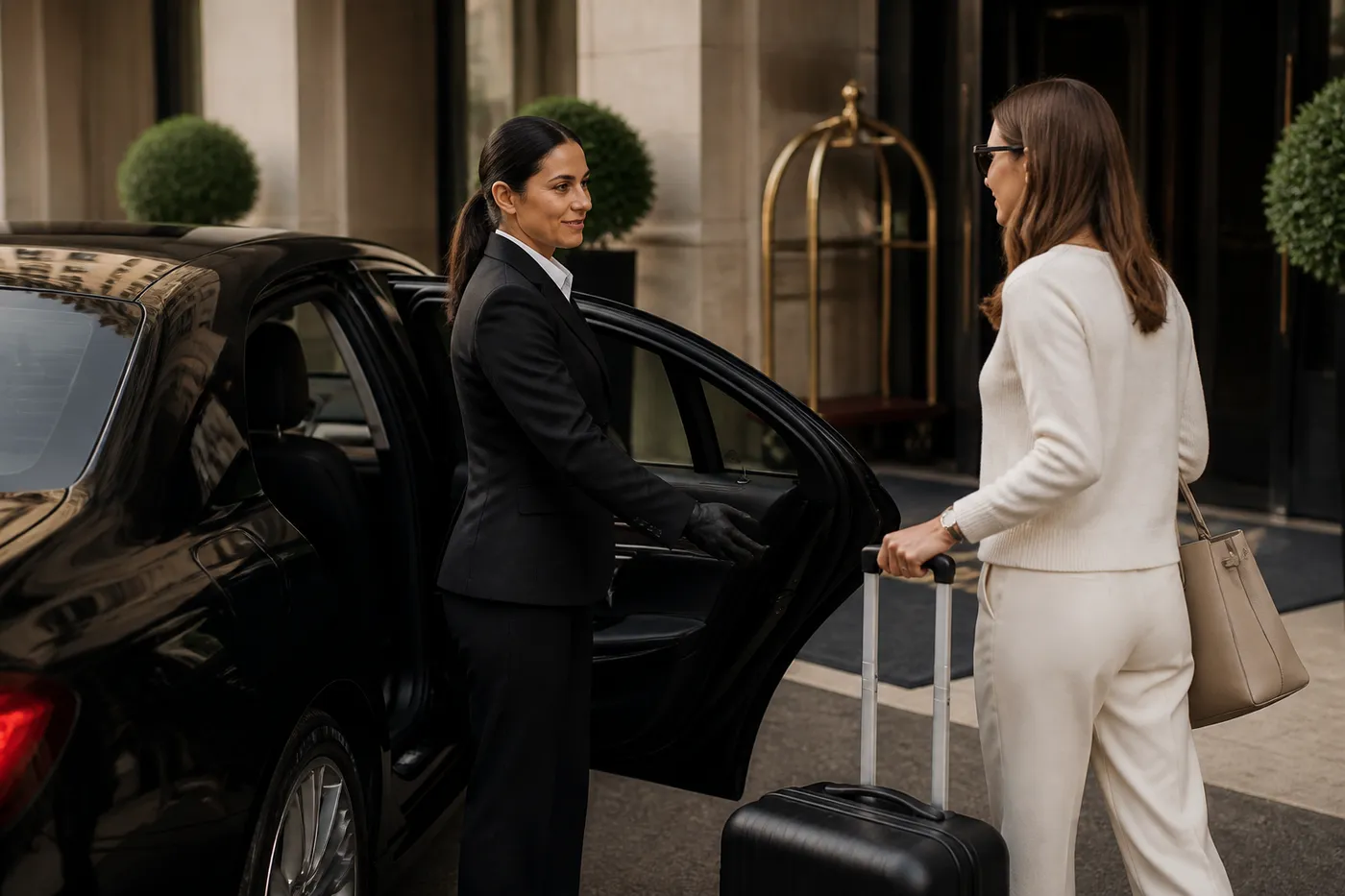
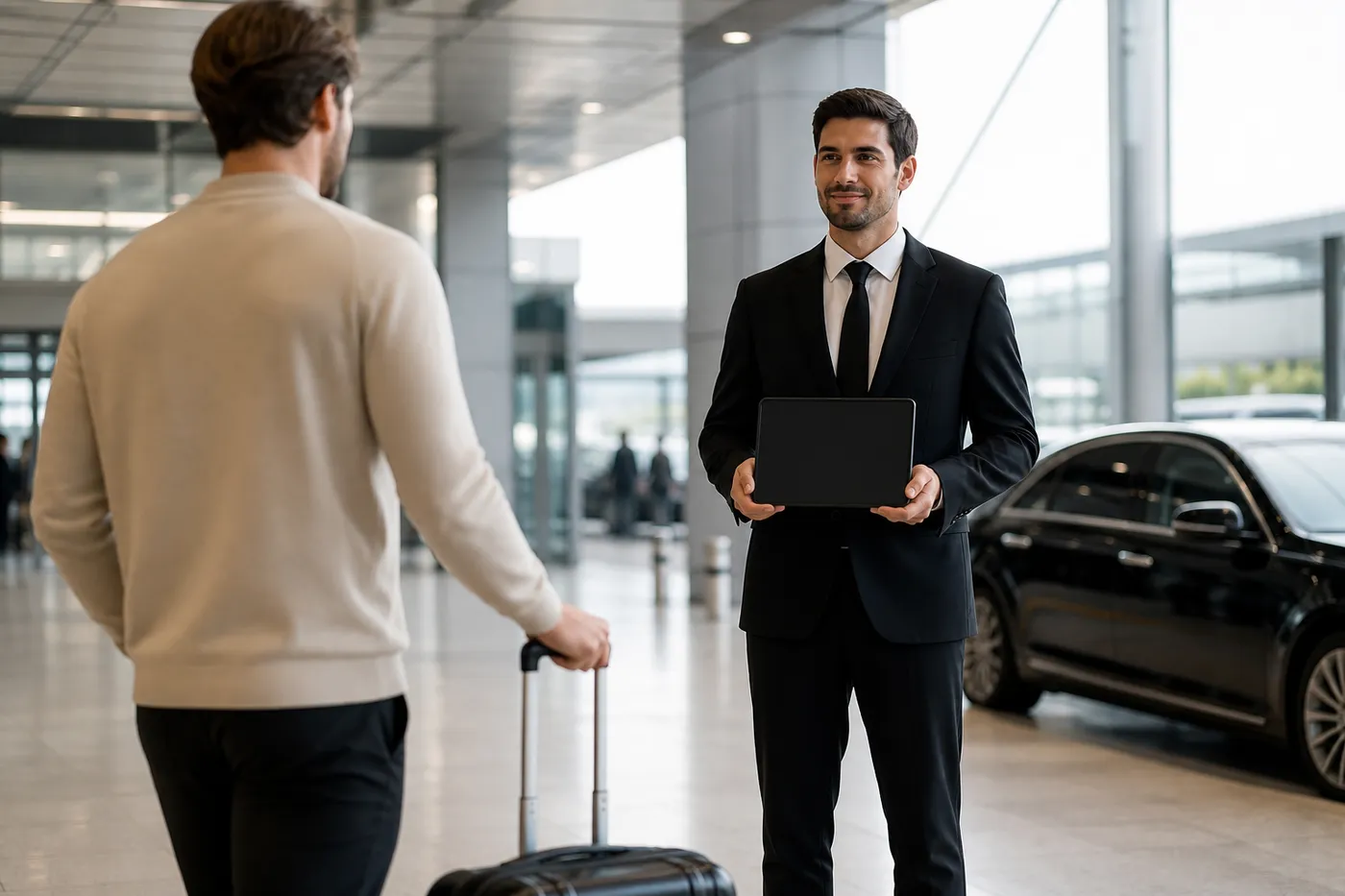
White card, black lettering, held at chest height. A very simple object that gets misused more often than anything else in the trade. White card, black lettering, held at chest height. It is one of the simplest objects in commercial life and it is misused more often than almost anything else in this trade: too small to read, too cluttered to scan, or carrying information that should not be in a public hall. A board is a signalling device with one job, which is to be read from twenty metres by somebody who is tired.
Filed under
The craft
Published
5 January 2025
Sections
8
Reading time
4 minutes
01/Opening
Where this starts
White card, black lettering, held at chest height. It is one of the simplest objects in commercial life and it is misused more often than almost anything else in this trade: too small to read, too cluttered to scan, or carrying information that should not be in a public hall.
A board is a signalling device with one job, which is to be read from twenty metres by somebody who is tired.
02/At a glance
What this piece is
Filed under
The craft
Published
5 January 2025
Sections
8
Reading time
4 minutes
03/The piece
The name board, and what goes on it
JN-01/What should be on it
What should be on it
The design question is narrower than it looks. A name board is signage read at a distance of twenty metres by somebody scanning a crowd, which puts it in the same category as a shop sign rather than a business card. Everything follows from that: size, contrast, typeface and the ruthless removal of anything that is not the name.
A name, in large plain letters, and nothing else that competes with it. If a company logo is on there it should be small and out of the way, because it is not what anybody is looking for.
Capitals work better than mixed case at distance. Sans serif works better than anything decorative. This is signage, not stationery.
JN-02/What should not
What should not
It is worth listing what turns up on these boards, because the list is longer than it should be and every item on it is a small piece of information about a private individual published in a public place. Nobody intends any harm by it and it is careless.
A flight number, an employer’s name, a hotel, a job title or anything that tells a hall full of strangers something about the person arriving. All of those appear on boards regularly and none of them belong there.
The full name is also worth a second thought. A surname alone is usually enough and is considerably less exposed.
JN-03/When to leave it in the car
When to leave it in the car
A board is a tool for a specific problem, which is two strangers finding each other in a crowd. Where that problem does not exist, the tool is unnecessary and occasionally unwelcome, and there are more situations of that kind than the industry’s habits suggest.
When the client has asked, when the passenger is somebody who would rather not be identified in public, and when the chauffeur and the passenger already know each other by sight. Regular clients almost always fall into the last category within a few journeys.
The alternative is a description agreed in advance: what the chauffeur will be wearing and where exactly he will stand. It works perfectly well and it is quieter.
JN-04/How to hold it
How to hold it
Having got the board right, most of the remaining failures are about how it is presented. A card angled at the floor is invisible from any distance, a card held at waist height competes with the crowd in front of it, and a card being moved about is harder to read than one that is still.
Still, at chest height, facing the flow of people rather than the floor. A board held at waist level or angled at the ground is invisible from any distance, and a board being waved is worse than no board.
The chauffeur’s own posture does most of the work. Somebody standing straight, looking at the doors and holding a card is legible from a long way off.
04/Referenced here
Pages this piece touches
The services, terminals and vehicles named above, each with a page of its own.
There has been a steady drift toward holding a tablet instead of a card, on the reasonable grounds that it looks modern and saves printing. It is worth being blunt about how that works out in practice in an arrivals hall.
Tablets are common now and they are worse in almost every respect: dimmer than paper under airport lighting, smaller, and prone to going to sleep at the exact moment somebody looks at them. They also look like an advertisement.
Card costs nothing, works in every light and does not need charging. Occasionally the older answer is simply the better one.
JN-06/The thing the board cannot do
The thing the board cannot do
For all of the above, the board is the second most important thing in a meet and it is a long way behind the first.
It cannot make up for standing in the wrong place. A perfect board held where the passengers do not walk is a perfect board nobody sees.
Position first, board second. The card is a confirmation that the person the passenger is already walking towards is the right one.
JN-07/Two people, one board
Two people, one board
Meeting a party rather than an individual changes the arrangement. A board with one surname on it works if everybody in the group knows whose name is on it, and it does not if the person who made the booking is not travelling, which happens frequently with corporate work.
The fix is to agree the name in advance and to tell the passengers what it will be, which sounds obvious and is skipped often enough to be worth stating.
JN-08/When the board is not needed at all
When the board is not needed at all
For a regular client the board disappears within a few journeys and nobody misses it. The chauffeur is recognised, the meeting point is habitual, and the whole apparatus of identification becomes unnecessary because the two people already know each other.
That is the natural end state of a working relationship and it is one of the quieter arguments for using the same company repeatedly rather than whoever is cheapest that week.
06/Related reading
Written alongside this one
Pieces that pick up the same thread from a different angle.
Asked often enough that the answers belong on the page rather than in a reply.
Will my name be displayed in the arrivals hall?
+
Only if you want it to be. Where a board is used it carries a name and nothing else, and where it is not, the chauffeur is described to you in advance so you know exactly who to look for.
Why not put the company or flight number on the board?
+
Because it tells a hall full of strangers something about the person arriving. A board should carry the minimum needed to be recognised and nothing more.
Do you use paper boards or tablets?
+
Paper. It is easier to read under airport lighting, larger, and it does not go to sleep at the moment somebody looks at it.
Every piece here ends at the same place: a car, a time and a name.
Send the date, the pick-up point and where you are going. A written quotation comes back with the vehicle, the chauffeur's arrival time and what the figure covers.