Skip to content
FCFirst ClassCHAUFFEURS

JNVehicles

Ride quality is mostly about the road

Comfort is a conversation about tarmac more often than it is a conversation about suspension. The car can only do so much.

From the journal
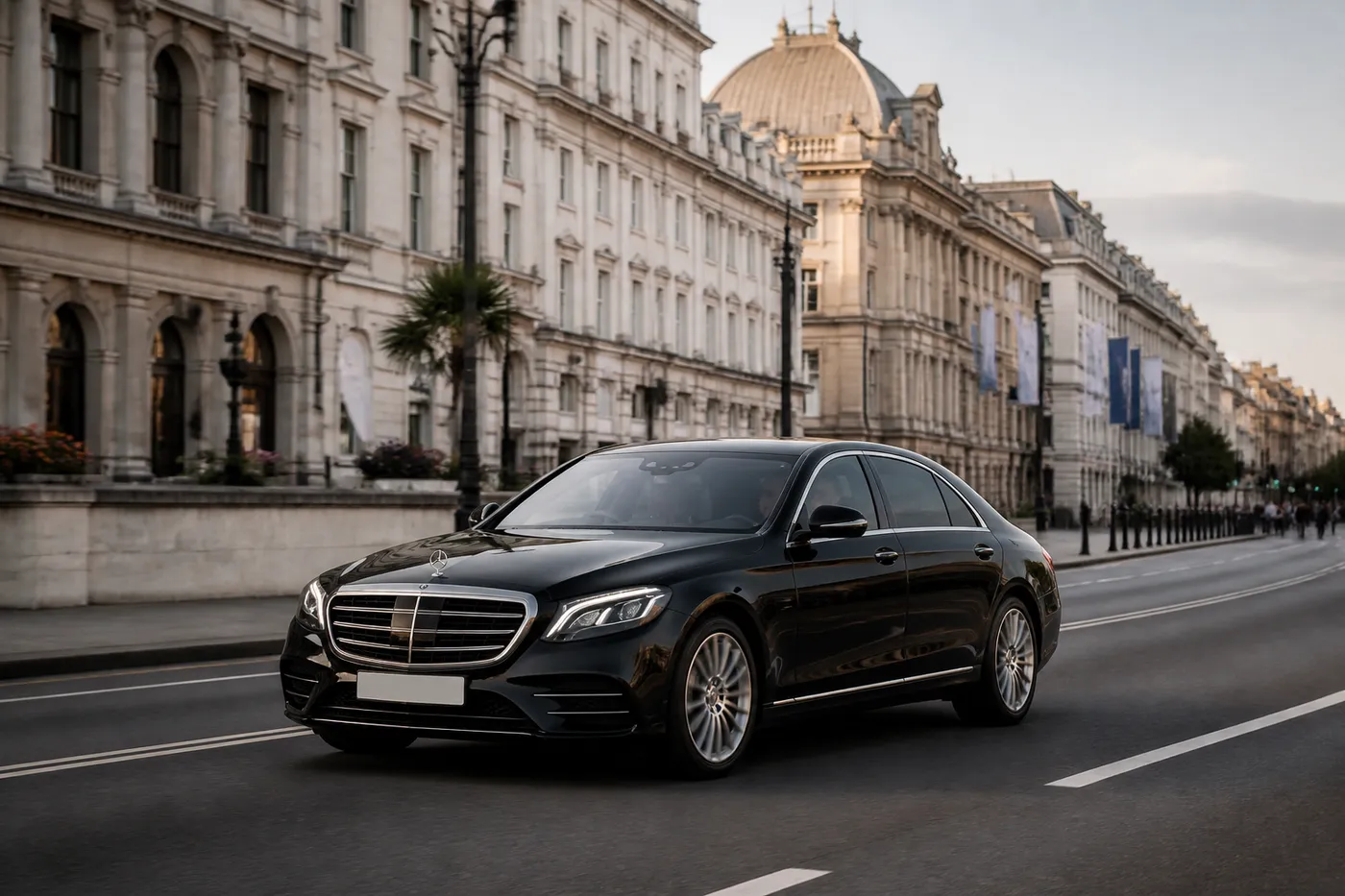
Prestige saloon city street

Written quotation, usually within the hour

Ride quality is mostly about the road: summary

Comfort is a conversation about tarmac more often than it is a conversation about suspension. The car can only do so much. Ride comfort is mostly a conversation about tarmac. A well-sorted saloon on a badly maintained urban road will be less comfortable than an ordinary car on fresh motorway asphalt, and no amount of engineering closes that gap. That is not an argument against good suspension. It is an argument for treating the route as part of the ride, which is something a chauffeur can actually control.

Filed under

Vehicles

Published

5 October 2025

Sections

8

Reading time

4 minutes

01Opening

Where this starts

Ride comfort is mostly a conversation about tarmac. A well-sorted saloon on a badly maintained urban road will be less comfortable than an ordinary car on fresh motorway asphalt, and no amount of engineering closes that gap.

That is not an argument against good suspension. It is an argument for treating the route as part of the ride, which is something a chauffeur can actually control.

02At a glance

What this piece is

Filed under
Vehicles
Published
5 October 2025
Sections
8
Reading time
4 minutes

03The piece

Ride quality is mostly about the road

Wheel size is the biggest self-inflicted problem

JN-01Wheel size is the biggest self-inflicted problem

Wheel size is the biggest self-inflicted problem

There is one specification choice that does more damage to ride comfort than any other, and it is made for reasons that have nothing to do with comfort at all. Larger wheels with lower-profile tyres look considerably better in a photograph and transmit considerably more of the road surface into the cabin, mile after mile, for the life of the vehicle.

A larger wheel with a thinner tyre transmits more of every imperfection into the cabin. It is a styling decision and it is paid for in comfort, every mile, for the life of the car.

The best-riding executive cars are usually the ones specified with the smaller wheel option, which is also the one nobody photographs.

JN-02Air suspension helps and is not magic

Air suspension helps and is not magic

Modern executive cars increasingly use air springs with adaptive damping, and the technology genuinely works. It smooths the sharp inputs that upset a conventional setup and it allows a car to be both comfortable and controlled, which used to be a trade. What it cannot do is invent a smooth surface that is not there.

Air springs and adaptive damping genuinely improve a ride, particularly at the sharp-edged bumps that upset a conventional setup. They cannot invent a smooth surface where there is not one.

They also introduce a maintenance cost that a passenger never sees and an operator very much does, which is one of the practical reasons the executive fleet looks the way it does.

JN-03Speed bumps are the enemy of everything

Speed bumps are the enemy of everything

No suspension solves a speed cushion. The geometry defeats every car ever built, the only mitigation is speed, and a route through a residential grid with twenty of them is an unpleasant journey regardless of what is being driven.

A car cannot be comfortable over a speed cushion, whatever it costs. Taking them slowly and squarely helps and only helps so much, and a route with twenty of them is a worse journey than one with none regardless of the vehicle.

This is why the fastest route is not always taken. Five minutes saved through a residential grid is not a good trade for a passenger with a coffee.

Motorway concrete is worse than it looks

JN-04Motorway concrete is worse than it looks

Motorway concrete is worse than it looks

Not all motorway is the same surface, and the difference is more noticeable from the back seat than from the front. Older concrete sections have both a coarse texture and a regular pattern of joints, and the combination produces a low-frequency thump at a steady interval for as long as you are on it.

Older concrete sections of British motorway have a coarse surface and a regular joint pattern that produces both noise and a repetitive thump. On a long run the effect is fatiguing in a way people notice without identifying.

Where a route offers a choice between an older concrete stretch and a resurfaced one, the difference over two hours is real.

05The piece, continued

Further down the page

JN-05Driving style is the last twenty per cent

Driving style is the last twenty per cent

Everything above concerns the car and the road, and there is a final contribution that belongs entirely to the person at the wheel. It is not about speed and it is almost entirely about looking further ahead than the vehicle in front.

Smoothness is mostly about anticipation: braking early and gently, taking a lane change in one movement, and reading a road far enough ahead to avoid reacting to it. It is the difference between a passenger reading comfortably and a passenger putting the book down.

Nobody notices good driving. That is roughly the definition of it.

JN-06The honest summary

The honest summary

Three factors, then, and only one of them is decided when a car is bought.

Choose a car with a sensible wheel, a route with a decent surface, and a driver who looks a long way ahead. That is the whole of ride quality and only one of the three is bought with the car.

JN-07Where a British road is at its worst

Where a British road is at its worst

The worst surfaces in this country are not on motorways at all. They are on urban distributor roads carrying heavy traffic on a maintenance budget, where a patchwork of utility trenches and repairs produces a surface that changes every few metres.

That is exactly the sort of road a city journey spends most of its time on, which is why a short urban trip is often less comfortable than a two-hour motorway run in the same car.

Loaded and unloaded

JN-08Loaded and unloaded

Loaded and unloaded

A car rides differently with four people and a full boot from how it rides with one passenger, and on some vehicles the difference is substantial. Air suspension mitigates it by levelling the car whatever the load; conventional springs are tuned for a compromise and are at their best somewhere in the middle.

It is one of the reasons a large saloon carrying one person can feel firmer than expected, and it is not a fault.

08Answers

Questions this piece raises

Asked often enough that the answers belong on the page rather than in a reply.

Why is the ride better on some journeys than others?

Road surface, mostly. Older concrete motorway sections and poorly maintained urban roads make more difference than the vehicle does, which is why route choice is part of the comfort.

Do larger wheels affect comfort?

Considerably, and not for the better. A larger wheel with a thinner tyre transmits more of every imperfection into the cabin, every mile.

Will the chauffeur avoid speed bumps?

Where a reasonable alternative exists, yes. A slightly longer route without twenty speed cushions is usually the better journey for anyone working or resting.

FCReservations

Every piece here ends at the same place: a car, a time and a name.

Send the date, the pick-up point and where you are going. A written quotation comes back with the vehicle, the chauffeur's arrival time and what the figure covers.

Hours
Reservations answered around the clock, every day of the year.
CallGet a quote